

– Additional reporting and photos by Athena Ebuen and David Ajtun
Black History Month is a time to honor the people, stories and movements that have shaped our past and continue to shape our future. At CSUN, it is also a chance to hear directly from Matadors about the moments that made them feel proud and seen, the people and places that have helped them thrive and the future they are building one step at a time. CSUN Newsroom spoke to students from diverse backgrounds who shared what Black History Month means to them right now, where they have found community on campus and the legacy they hope to leave.
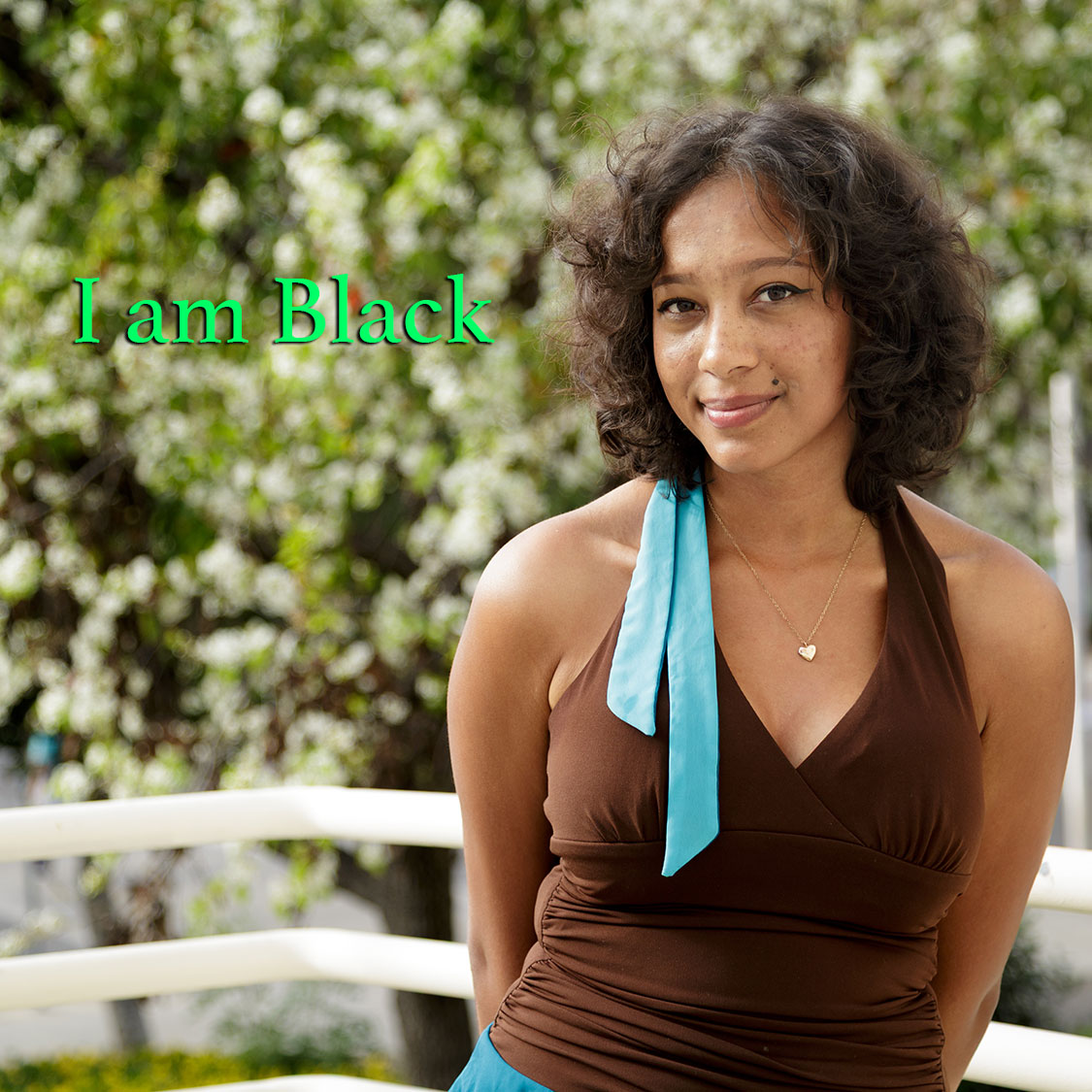
Nevaeh Zuck, 21, “I am Black.”
A junior psychology major with a minor in Religious Studies and a pre-med pathway, Zuck explained her identity as rooted in the community she grew up with. “I am a black woman. I am biracial, so I am half Black, half white,” she shared. “I grew up with my black side, so my identity has always been as solely a black woman,” she continued.
For Zuck, Black History Month is urgent and personal. “We’re having a fight against erasing parts of Black history and not watering it down to make other people feel comfortable. I don’t want my ancestors’ legacy to be erased,” Zuck explained. The Matador sees the month as an opening for learning that should reach far beyond one community. “This month provides the opportunity for not just Black students, but students in general to learn about these legacies because there’s so many important stories that aren’t being told and need to be told.” She added, “[We can’t] try to take history out of the mix and try to make everyone feel comfortable. The fact is, America has an uncomfortable history with race and we can’t erase that.”
The psychology major told Newsroom she found connection on campus by launching CSUN Planned Parenthood Generation Action and by building relationships through campus spaces and events. “I was able to work with the Women’s House and find a safe place there… doing events at the Black Student Union… [these] helped me to find the community and expand my networking because I got to meet people during club events.” Looking ahead, she hopes her legacy means “that the next generation doesn’t have to worry about their rights being taken away from them… especially when it comes to reproductive health care right now, that’s one of my primary goals,” she explained. “I wanted to build a safe place for people to advocate for themselves.”
Looking ahead, this Matador is “building a community of activists on campus.”
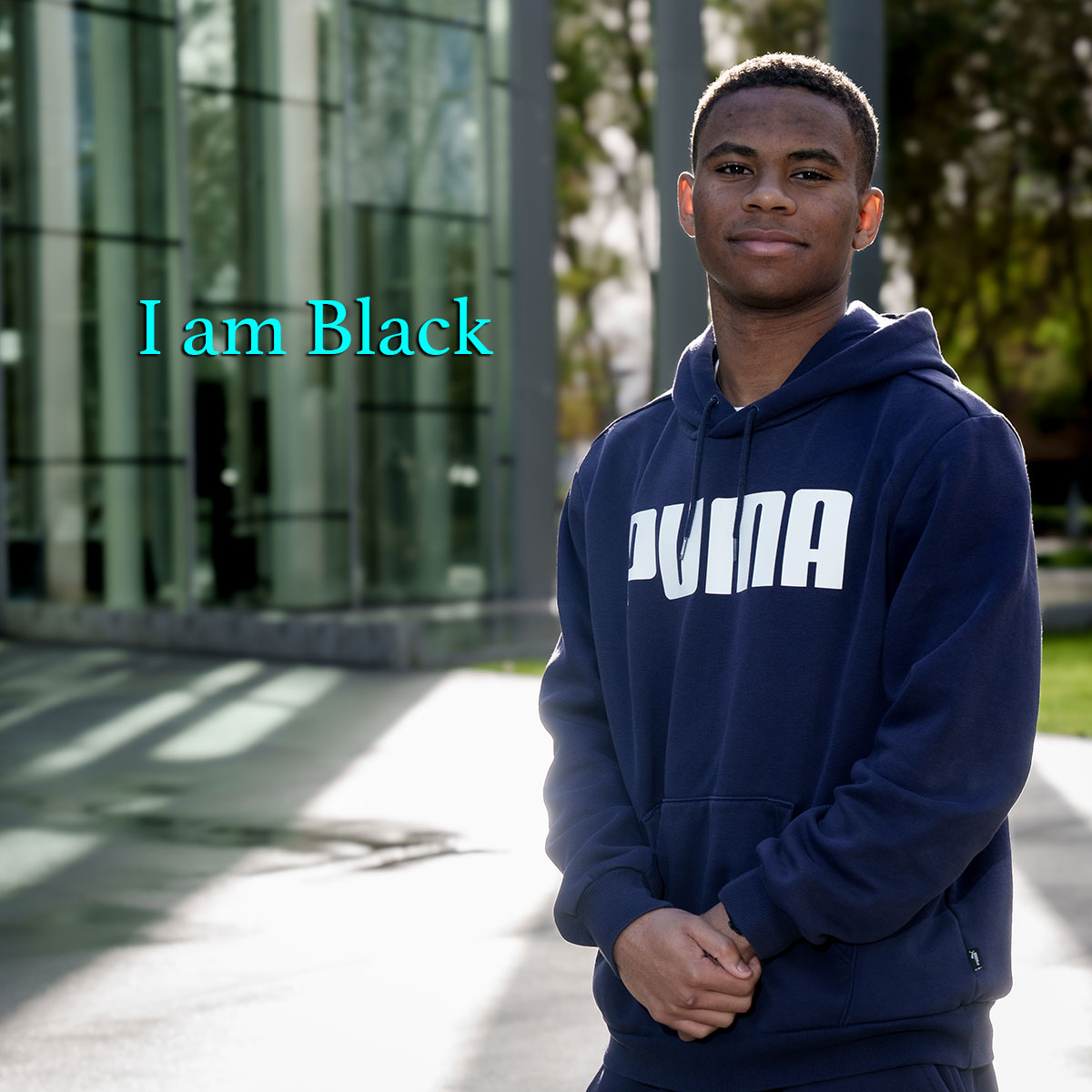
Joachim Powell, 20, “I am Black.”
Powell, a junior broadcast journalism major, spoke about his identity through family and roots. “I am a Black American,” he told Newsroom. “Both of my parents were Black Americans born in America, and my family tree starts in America.”
As for the celebratory month, Powell connected it to his opportunities, perseverance and daily growth. “Black History is the reason I am here today asking these questions,” he told Newsroom. “The sacrifices, the torture and the willpower that [other Black people] showed before us, are the reasons that we can get an education from public universities and have those universities be able to have ethnic studies programs.” For Powell, that history shapes more than his path at CSUN. “I can’t say the history connects with just who I am becoming at CSUN; it connects to who I am becoming as a person every day,” he said.
Powell said he found his strongest sense of community in the classroom, especially through ethnic studies. “I found the most community during my time at CSUN in my ethnic studies classes,” he said. “In these classes, I not only learned about the history of People of Color Americans in a new light, but also connected with other Black and POC students, and to this day, most of my closest friends in college have been made in those classes.” He also pointed to campus academic support spaces that help him stay grounded. “The academic services the campus offers, tailored to the ethnic studies department, have also been a great way for me to find community on campus,” Powell said. “Places like the Africana Studies Writing Center providing a communal space to work and get resources to succeed.”
When asked about legacy, Powell said he hopes to leave behind something rooted in leadership and care for others. “I hope to create one that is able to uplift and empower those around me,” he told Newsroom. He explained that starts with staying focused in his courses. “Doing my best in academics and work as the challenges grow in difficulty is all I can do,” Powell explained. “To lead people, you first need to be able to lead yourself to your desired destination.” He added that one of his biggest takeaways from college has been clarity and intention, and shared, “The biggest lesson I have learned in college is the lesson of having your own vision for yourself. As I began to be streamline the vision of who I wanted to be… I began to gain more out of college.”
Looking ahead, this Matador is “building a community of people who support me, inspire me and hold me accountable to the highest standard we all hope to reach.”
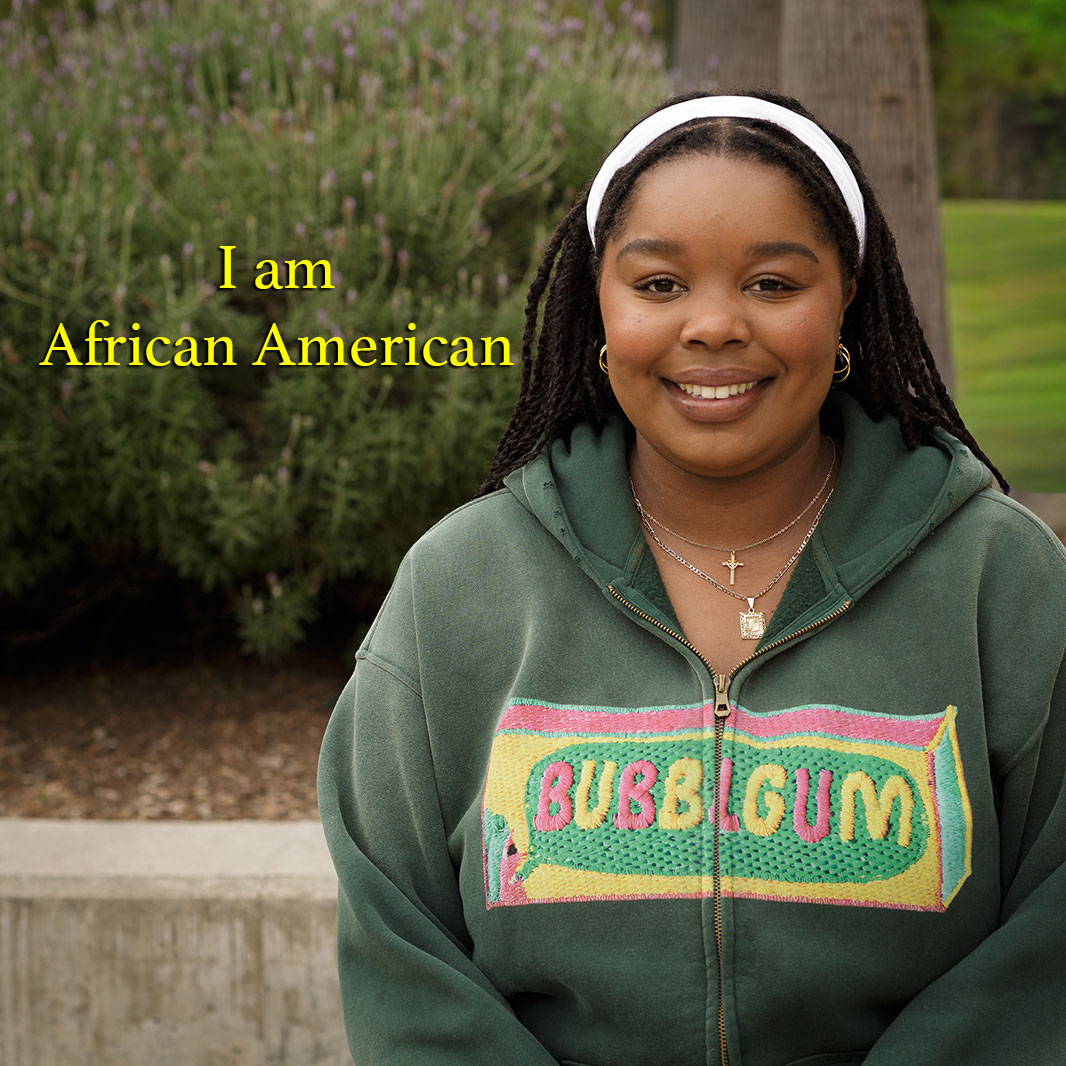
Naomi Moore, 21, “I am African American.”
Moore, a senior sociology major with a minor in psychology, described her identity as rooted in both her family histories. “I am African American,” she told Newsroom. “My mom is actually full 100% African. She grew up in West Africa, and my dad is from the States. I’m really like 50/50,” Moore explained, adding that she carries pride in both sides of that story. “I’m African American and I’m proud of it,” she said.
While reflecting on Black History Month, Moore called it “a representation of Black excellence.” She thinks often about the impact of those who came before her. “Our ancestors who have invented stuff, been the blueprints and set trends for Black culture, that’s something to be proud of,” she said. The sociology major said CSUN has helped her see herself as part of that legacy in progress. “Being at CSUN has helped me be part of Black excellence,” she explained. “Getting an education, which not a lot of people get the privilege to do, being involved and utilizing opportunities that I’ve had at CSUN.”
Moore said her sense of community has grown through the spaces where she shows up and serves. “I’m part of the Black Campus Ministries on campus,” she told Newsroom, adding that she has also found connection through her work at the CSUN Food Pantry and as a resident advisor in housing. “Also, the Black House has been a space that’s been helpful,” she said. Looking ahead, Moore hopes her legacy is defined by giving back. “I hope to help as many people be successful as I can,” she told Newsroom. “I want to help as many people as I can and reciprocate the energy of those who have helped me when I needed it.”
Looking ahead, this Matador is “building a future with good things because I know I deserve that and in doing so, it’s how I can help those around me.”
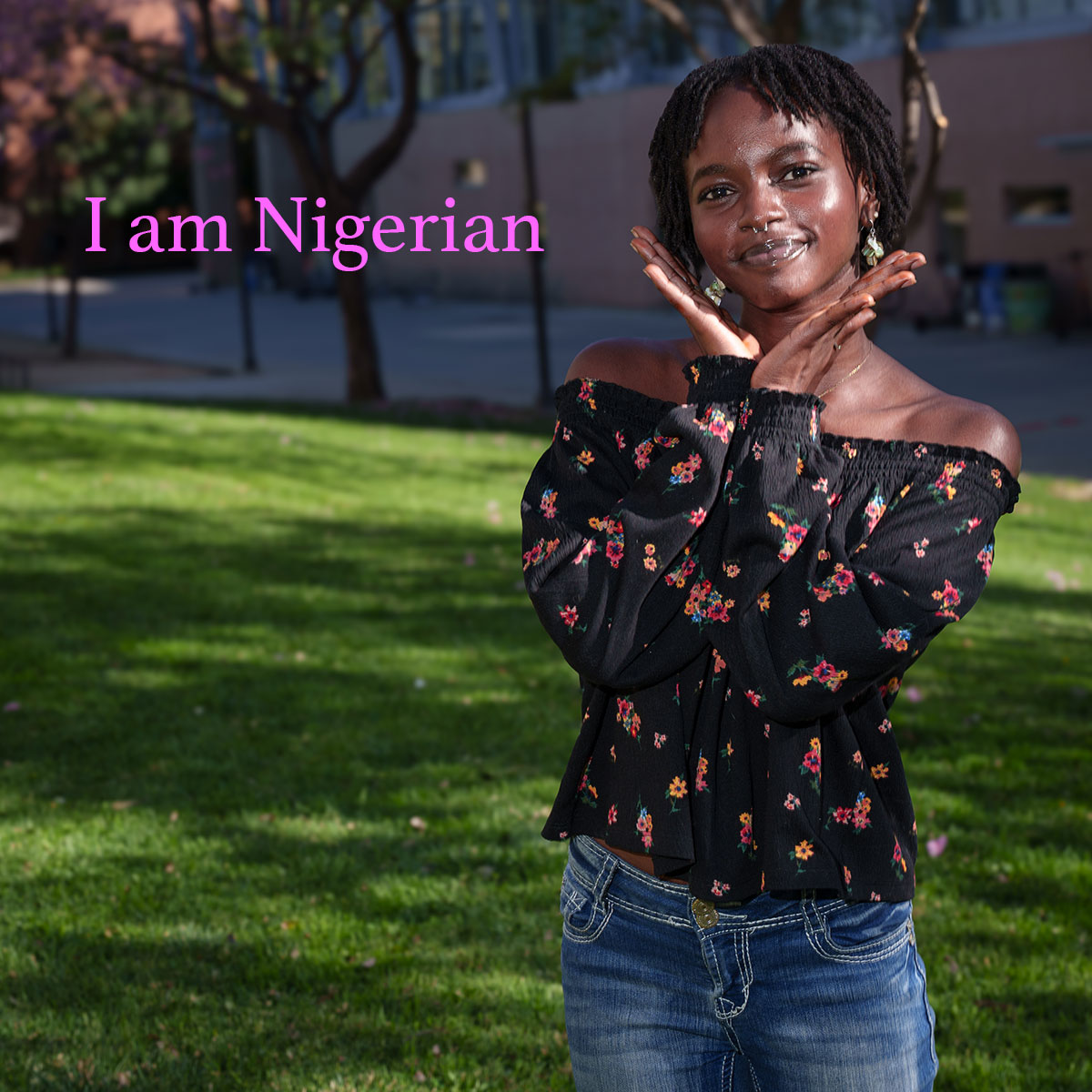
Hauwa Anisa Mohammed, 21, “I am Nigerian.”
Mohammed, a junior screenwriting major with a minor in PR, defined their identity through culture and lived experience. “I am Nigerian,” they told Newsroom. “I was born and raised in Nigeria.” While they see themselves as a Black person, Mohammed said their cultural identity is clear. “I’m definitely Nigerian through and through,” they explained.
When asked what Black History Month can look like in everyday life, Mohammed encouraged students to “talk to their Black elders… because they hold a lot of history that is not going to make it into the textbooks.” Mohammed also connected the month to action and empowerment through their campus roles. “I am a student outreach ambassador, and I work for Black Scholars Matter,” they told Newsroom. “I’m also the vice president of the Nigerian Students Association… [and] the outreach and tabling lead for the Young Democratic Socialists of America here at CSUN.” That work, Mohammed said, is about reminding other students of their power. “It’s empowering not only for myself but also reminds me that I can show other Black students that we have agency… and making sure that Black students have the access to education and also have the resources that they need to keep them in school.”
Mohammed said community came quickly once they found spaces that felt familiar. “I joined the African dance team, that’s where I immediately got the connection that I really wanted,” they told Newsroom. “Some of [the other dancers] are Nigerian, so immediately I had people who I connected with culturally, and I got to do something that I love.” They also pointed to CSUN’s annual Welcome Black event as a key moment of belonging. “It was a reminder for me like, ‘Oh, we’re here [at CSUN],” Mohammed said. “To see all the Black people there in the same space… it definitely made me feel less out of place.” As they think about legacy, Mohammed said they are focused on ownership and representation in their storytelling and filmmaking. “Taking back the agency and being the one to write your own story,” they told Newsroom when asked about making an impact in their field. “I want to write things that portray that complexity… I’m trying to fill a gap in the film industry.”
Looking ahead, this Matador is “building a space for Black students to realize their agency.”


Comments are closed.