

Media Contact: Carmen Ramos Chandler, carmen.chandler@csun.edu, (818) 677-2130
News and social media are filled with images of federal law enforcement officers violently grabbing people off the street, from places of work and their homes.
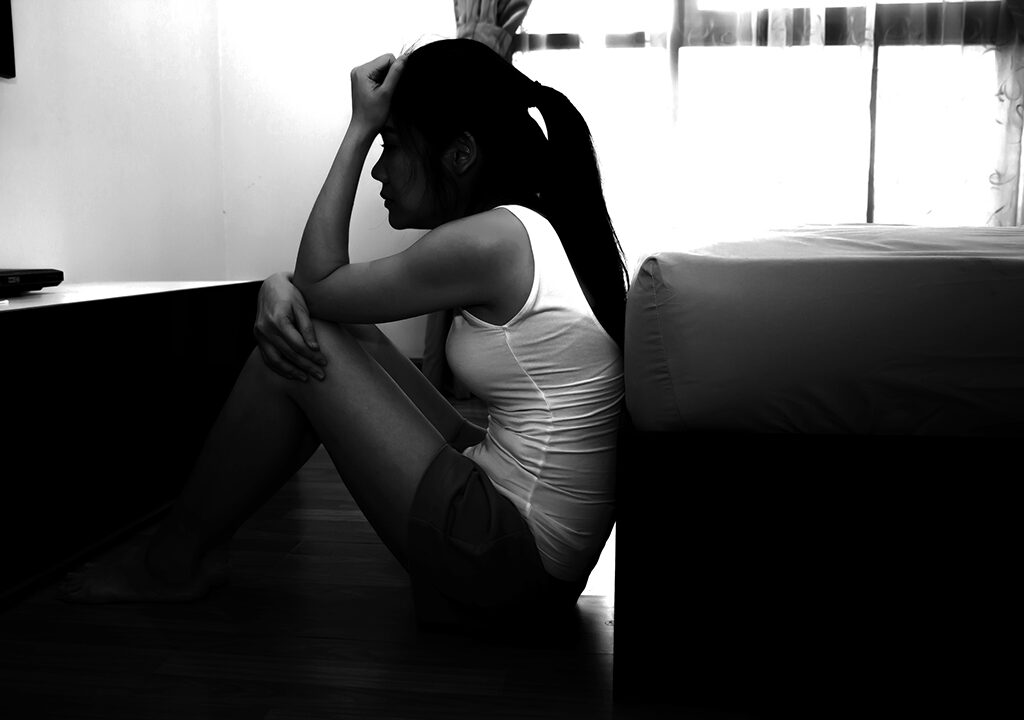
California State University, Northridge criminology and justice studies professor Vickie Jensen said she is worried that as the crackdown on undocumented immigrants and their supporters continues, the rates of domestic violence will increase.
“Despite the fact that some police agencies have attempted to build trust, people watch the news, people look at social media, people see the stories,” Jensen said. “Any trust in all law enforcement is now gone, whether the agency deserves it or not.”
As the crackdown continues, more people are going into hiding, making them vulnerable to abusers, she said.
“I keep thinking about how closeted people are,” Jensen said. “Whenever you’ve got closets, you have more ability to use power and control over people. COVID-19 created an increase in domestic violence because people just weren’t going out. We have effectively a sociopolitical COVID, when it comes to those who aren’t citizens, even those who are citizens but are of color, who are living in those areas identified with increased ICE activity. If people feel then can no longer trust the system. There is no escape.”
Jensen, an expert on gender and crime and domestic violence in CSUN’s College of Social and Behavioral Sciences, said that when even those who are “following the rules” and going through proper legal channels to obtain citizenship are being detained, separated from their families and deported, the power an abuser has over their victim is tremendous, especially if the victim is undocumented or a person of color, regardless if the abuser is male or female.
“It’s important to remember that domestic violence is about power and control,” she said. “Those who abuse, who get power connected to their status by society, have an easier time abusing. For women who abuse, it’s like they’re swimming upstream. They do it, but the current pushes against that. Men in a patriarchal society, on the other hand, get permission and even encouragement. It’s been institutionalized historically to have power and control over their partners.”
Jensen said there is a stereotype of who is a victim of domestic violence.
“The image is usually white-race based — a passive housewife who is dominated, controlled and abused by her heterosexual husband,” she said. “The image involves physical abuse, but the fact is that psychological and verbal abuse are as damaging. When combined with other forms of abuse, it’s just devastating. Whatever ability a victim — male, female, gay, straight or other — has to stand up against the abuse doesn’t necessarily means that the abuse will stop.
“Whatever in them that might have stood up to the abuse is torn down by all the gaslighting,” she added. “It used to be called ‘crazy making.’ Extreme denial of what is happening and shifting the blame to the victim. ‘If you hadn’t left my socks on the floor in the morning.’ ‘Things were so good and then you got ‘bitchy.’ It’s a cycle of violence — tension building, acute battering and a honeymoon all hearts and flowers, and then it starts again.”
Jensen said, domestic violence happens regardless of race, class, gender and sexuality.

“It’s about power and control,” she said, recalling the fate of a former student, Emily Fox, who was majoring in sociology and had dreams of a career in law enforcement.
“Sadly, Emily lost her life at the hands of her ex-boyfriend in January 2016, before the final semester of her degree program,” Jensen said.
In 2018, the faculty in the Department of Criminology and Justice Studies created an academic award in Emily Fox’s memory, the Emily Fox Award for Outstanding Work in the Area of Intimate Partner and Family Violence. Department officials are currently working on an establishing an endowed scholarship in Fox’s honor. She was awarded her bachelor’s degree in sociology from CSUN posthumously last year.
“It is very important to me that we give this award in Emily’s honor, not just because Emily was a CSUN student or was one of my students, but because she is one of 1,809 women murdered by males in that year and one in 184 women murdered by males in California,” Jensen said. “These are victims that we seldom hear about, and the intimate partner violence experienced by so many of them is rendered invisible. Emily’s award is our, and my, attempt to remember.”


Comments are closed.