

Media Contact: Carmen Ramos Chandler, carmen.chandler@csun.edu, (818) 677-2130
There are memes out there that look so real that it’s hard to believe they are not. Some people are convinced that a claim they saw on the internet that included documents and other items of support is true, regardless of how incredulous it sounds.
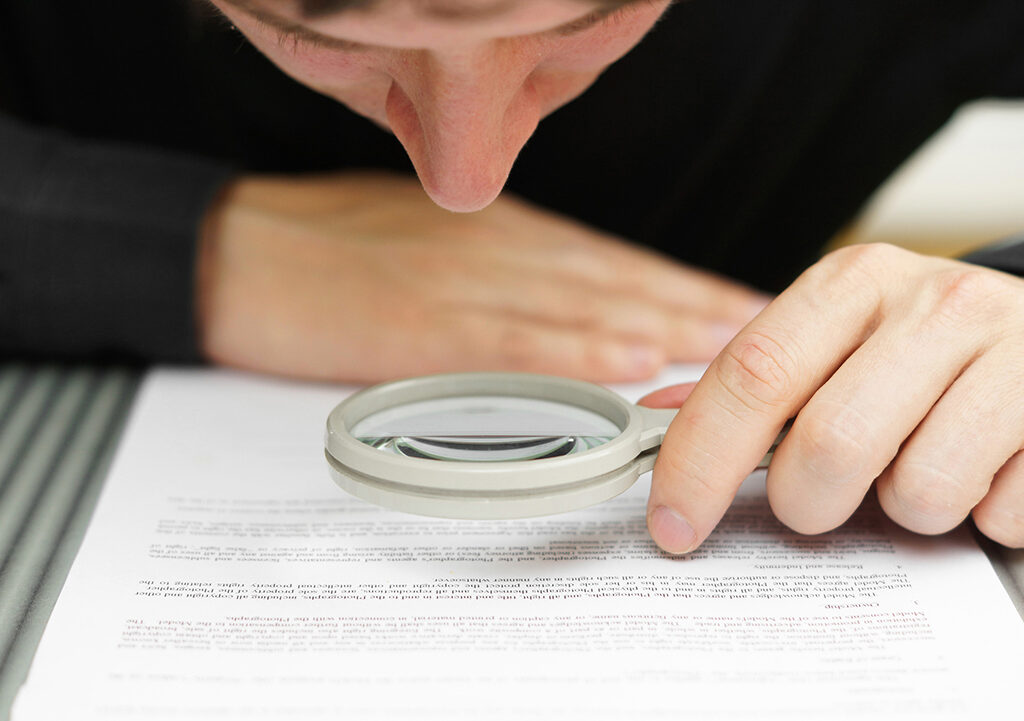
Creating fake artifacts and forging documents to assert new “truths” is nothing new. It’s been going on for centuries, “since the time when you had books made out of papyri,” said California State University, Northridge history professor Donal O’Sullivan, who wrote the book “Fake: Famous Forged Documents and Their Historical Legacy.”
“Even in antiquity, books were manipulated and passed off as written by somebody else to make money or as an honor to that person,” he said. “But there was also a sensibility that that was wrong. Even the Greeks and Romans understood that forging something was wrong, and they tried to ostracize people who did that. As far as faking documents, art and other things, that has been going on for centuries all the way until today.”
O’Sullivan noted that early Christianity was marked by a number of fake papal and apostolic letters “because everybody had their own interpretation of the Bible.”
During the Middle Ages, there were quite a number of political and religious forgeries because so many people could not read. If one needed documentation, say legal proof of a title to a meadow or a castle, lawyers and monks, who could read and write, “were very tempted to manufacture something,” he said.
O’Sullivan said there was also “pious fraud,” forgeries created for “a higher purpose.”
“The forgers didn’t really have nefarious goals. They were doing this to fortify the faith,” he said. “For them, there was a bigger truth, and that bigger truth allowed a white lie. If you created a relic or manufactured some artifact that helped people believe, that was considered admissible. It was only with the Renaissance that people thought that we have to identify the authentic and describe the fakes. They went back to the Greek and Romans and said, ‘ We need to wage a war on the forgery because it distorts the truth.’”
Once there is a demand for a certain viewpoint or artifact, he said, people will create it.
“It usually happens within a debate in which one position is not strong enough and people will try to find a document that will give them an edge over their opponent, even if it has to be manufactured,” O’Sullivan said. “That’s where we get into political forgeries. They’re not necessarily for monetary gain, though they can be. Political forgeries are intended to distort the discussion and to create support for a particular position.”
The existence of forgeries inspired the development of experts, he said.
“I call this a midwife for history and other scholarly scientific disciplines because the public demanded somebody who could tell them what is right and what is wrong,” O’Sullivan said. “In order to do that, you actually have to learn.”
Before the availability of forensic tools, he said experts would devour books to become familiar with a particular author’s style, such as Shakespeare’s, so that they could prove or disprove claims about the sudden discovery of a new work or that a piece had been written by someone else.
“That was the main method that was used until we get into the 19th and 20th century when we had paper and ink analysis that made it easier to detect a forgery,” he said. “Although, of course, forgers also use modern technology to try to dupe people.”
O’Sullivan can appreciate how frustrating it can be for a lay person to try to figure out if they are being duped.
“As historians say, ‘it’s all happened before,’” he said, pointing out that during medieval times in the marketplace people had little education and no idea of how to separate the truth from forgeries “so they would scream at each other all kinds of things — such as whether something was a remedy for disease or not.”
Individuals based their decisions on how trustworthy they felt a person was.
“A lot of people were swayed by the person who could speak the best, which, oftentimes, wouldn’t lead to better results. That was a medieval problem,” O’Sullivan said. “This changed in the modern age when we developed methods of evaluation and assessing. This is what the Scientific Method and the Enlightenment were all about.
“Now, we are at the end of the Enlightenment,” he said. “We are again facing a medieval marketplace where everybody screams at us, and we really don’t have the means to figure it out. That’s why the value of the expert should become greater. We need support for the institutions that will help us understand where this meme is from, who created it and whether we should trust it.”
He cited Russia and its recent history for lessons.
“The Russian government has tried to destroy truth because they knew that a country or society that keeps track of their government and that is able to criticize their government is not able to be controlled,” he said. “What they did in the early 2000s was flood the information space with all kinds of crazy conspiracy theories. For example, that Hitler had second thoughts and fought as ‘Comrade Hitler’ against the United States.
“The government sponsored these books, stories and films,” O’Sullivan continued. “People were excited about them. They followed them until many people got confused about what had actually happened.”
He noted that throughout history governments have tried to manipulate the information sphere.
“Not really to promote a falsehood, but to destroy the idea that there is something like truth,” O’Sullivan said. “People then question everything. When people question everything and don’t believe anybody, then you can get away with all kinds of stories.”
O’Sullivan recalled the words of Princeton historian Anthony Grafton, “A culture that tolerates forgery will debase its own intellectual currency.”
“If we give up on truth, we’re back in the dark ages,” O’Sullivan said.


Comments are closed.