

Media Contact: Carmen Ramos Chandler, carmen.chandler@csun.edu, (818) 677-2130
(This is the first of a two-part series profiling students taking part in California State University, Northridge’s 2026 commencement ceremonies. To see part 2, click here.)
It’s easy to tell someone to follow their dreams. But the path is not always straight forward. Sometimes life happens.
Regardless of the obstacles or the time it took to navigate them, members of the graduating class of 2025 said California State University, Northridge was there when they needed it and made it possible for them to achieve their academic dreams.
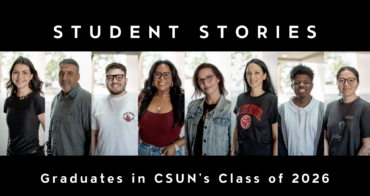
An estimated 11,355 students are eligible to take part in CSUN’s commencement exercises this week. Each student has a personal story of hard work, perseverance and success. Below are just a handful of those stories:
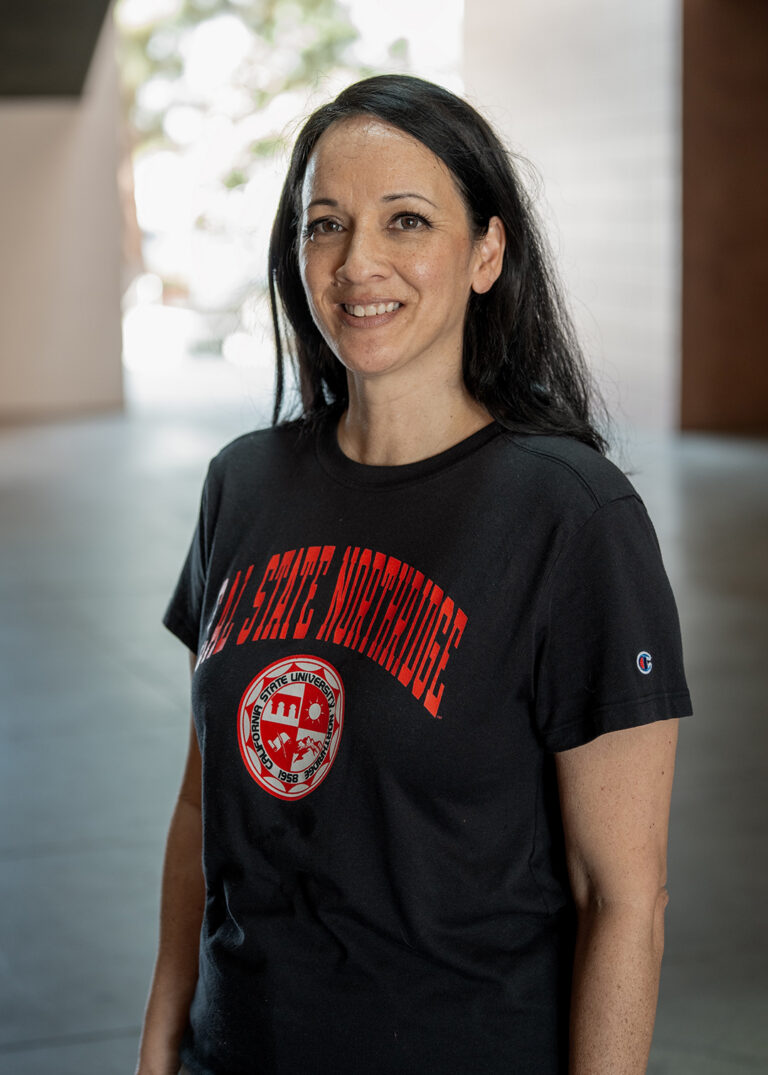
Angela Boss, B.A. in Child and Adolescent Development
Angela Boss, 48, of Santa Clarita, started her college journey in 1995 at age 17 in Illinois. By that point, the California native had attended 15 elementary and high schools, been in foster care and temporarily homeless because of an unstable home life.
“I first went to a community college and transferred to a university,” she said. “But, as most people know who have been through these types of experiences, it makes it difficult to be an effective adult. So, even though I was trying — I loved school — I was having a difficult time processing and being able to be consistent with my studies.” 
She dropped out but never gave up her dream of a college education. Over the next two decades, she took classes while juggling a life that included marriage, raising two daughters, working intermittently part and full time, and taking classes when she could.
“I think I’ve taken over 90 courses during that time,” Boss said, adding that despite “life happening,” she was determined not to give up.
“I’m a very different person than I was when I started,” she said, noting that she was able to concentrate on finally completing her degree once her daughters finished high school. “When you are finally able to get on that trajectory of being able to concentrate on what you really want and not have life totally interfere, you are able to accomplish a lot.”
She said she chose to major in child and adolescent development because she has empathy for disadvantaged children.
“I understand a lot of the challenges that come with coming from a poor family, coming from families that are not, by society’s standards, idealistic,” said Boss, who has spent the past two years interning at CSUN’s Child Development Institute. “I feel like I’d like to give back to society for what I have been given. I love the idea of helping and being supportive of children in many ways that I wasn’t. Sometimes, it takes just one person to keep a person afloat.”
To that end, Boss will apply to graduate school this fall in hopes of studying behavioral intervention, with the long-term goal of working with preschoolers.
Boss is scheduled to take part in the commencement ceremony for the College of Health and Human Development on May 16, the same day, only later, that her eldest daughter will graduate with her bachelor’s degree in business from CSUN’s David Nazarian College of Business and Economics.
“I never thought that I would get where I am or have what I have,” Boss said. “I don’t know how I got here. Persistence, I guess, and people who helped me along the way; who believed in me even when I didn’t believe in myself. I would tell young people who are in situations like I was that it is helpful to have people in your life to counter some of the messages you were told growing up that achieving your dreams is impossible. You need people saying that your fully capable. I found those people here at CSUN.”
To see a full-length video of Boss’ story, click here.
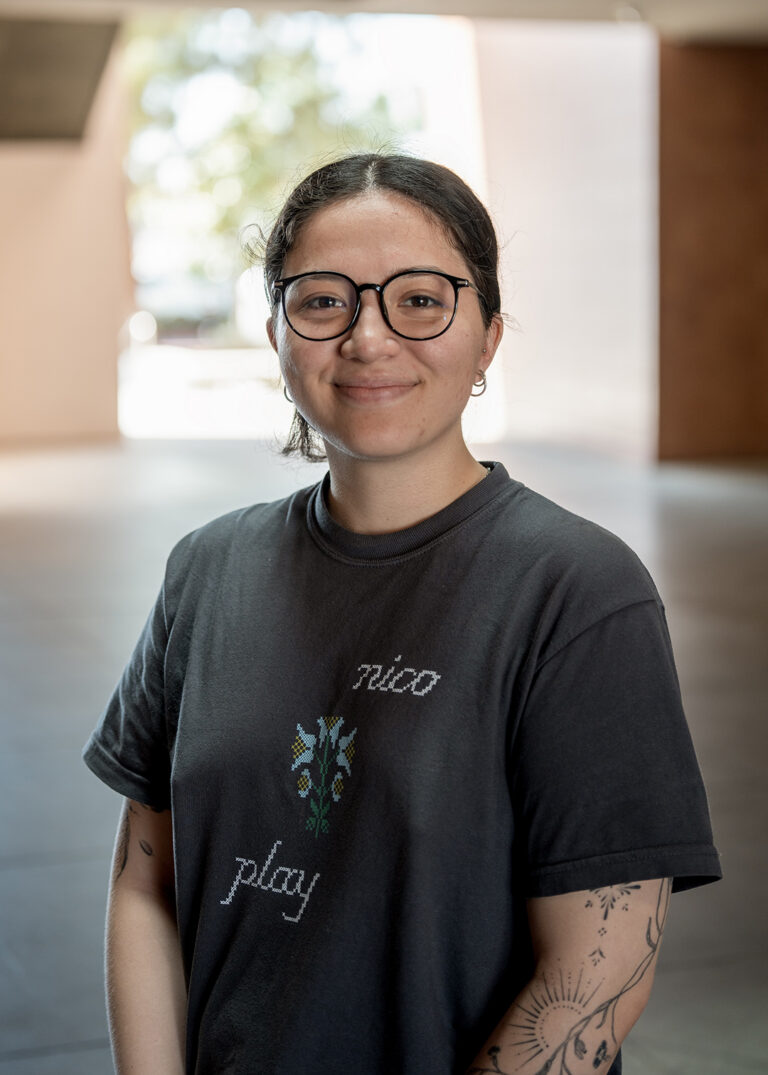
Kayla Cortez, B.S. in Cell and Molecular Biology
Kayla Cortez, 23, of Northridge, came to CSUN straight out of high school. It was near the end of the COVID-19 pandemic and, with family finances tight, she applied to only four schools, taking advantage of the CSU’s fee waiver. She got into two: San Marcos, which was “too close to home” in Lake Elsinore, and Northridge, a place she had never heard of.
Cortez started as a criminology and justice studies major, interested in becoming a detective or forensic scientist, but discovered that writing about law was not what she wanted to do. Her advisor suggested she switch to biology if she still had dreams of becoming a forensic scientist.
“I switched to cell and molecular biology because I thought that would pertain the most to forensic science, even though I knew I’d have to start all over because I hadn’t taken the right GEs (general education requirements) for biology,” she said. “But I don’t regret it. I was so much happier.”
She spent a year researching cancer cells in professor Eric Kelson’s chemistry lab before she earned a prestigious summer internship at Harvard Medical School, where she worked on breast cancer cells and studied genomics.
“That made me love biology more than ever,” she said. “I knew this is what I can do.”
When she returned to CSUN, she confessed to Kelson that she was more interested in biology — “he was very understanding and supportive” — and found a place in cellular biology professor Maria Elena deBallard’s lab. There, she used a scanning electron microscope to study the skin of sharks and rays to gain a better understanding of their epidermis (skin) and sensory receptors.
To help pay for her schooling, Cortez worked as a cook at a movie theater Monday through Friday and as a dishwasher on the weekends. She also was a student assistant in the Department of Kinesiology.
“I knew that if I moved out here, I’d have to take responsibility for myself,” she said. “I was going to make it work somehow. It kind of motivated me. I had a dream I wanted to accomplish. I told myself, ‘You’re just going to do it. I’ll work this much for a better future for myself.’”
The next step on Cortez’ journey is a doctorate in immunology and a future teaching at a college or university.
“I love teaching,” she said. “I would love to come back here to CSUN and teach. That would be a dream.”
Cortez is scheduled to take part in the commencement ceremonies for the College of Science and Mathematics on Friday, May 15. To see a full-length video of Cortez’ story, click here.
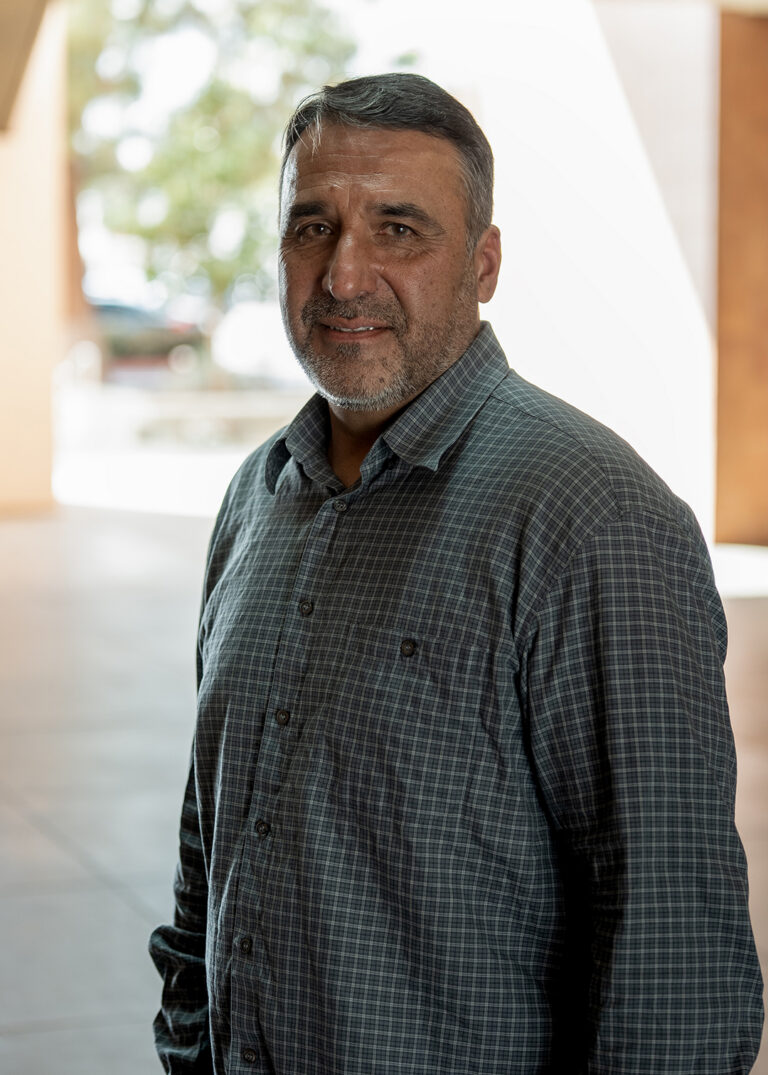
Jason McIntire, B.A. in Chicana/o Studies and Interdisciplinary Studies
Jason McIntire, 57, of Encino, admitted that when he first walked onto the CSUN campus as a student in 1987, it was with more hope than direction.
“I thought I had all the time in the world,” he said. “College felt like a door I could step through whenever I was ready. But life doesn’t always wait. Work, responsibility and challenges I never saw coming pulled me away. What I thought would be a short break stretched into 35 years.”
He married, had children and started a successful automotive restoration business with his brother. But the memory of his mother’s determination to get a college degree remained at the back of his mind. She had grown up in rural, segregated Texas, where going to school for migrant Mexican Americans was often a challenge.
“All she ever wanted to do was go to school,” he said.
McIntire’s mother eventually moved by herself to California, earned her GED and enrolled at CSUN in the 1970s. During that time, she’d also married and started a family. She would take classes when time permitted. But when his father died in 1980, McIntire said his mother temporarily put aside her dream of a college degree to deal with the challenges of being a single parent of five.
“It wasn’t until 1984 that she started back at CSUN,” McIntire said. “She had five children, worked two or three jobs and went to school. She ended up graduating a couple years later and became a special ed teacher at Grant High School when she was in her mid 40s.”
When his daughter graduated from CSUN four years ago, the occasion reminded McIntire about his mother’s belief in a college education.
“I came onto campus one day and went to the admission office and said, ‘Here’s my school number,’” McIntire recalled. “They said, ‘There’s only seven digits. There are nine in school ID numbers now.’ But that’s what started it. I always wanted to finish, but now it became more of not just completing what I wanted, but as a way of honoring my mother.”
McIntire said he plans to incorporate a lot of what he learned as part of his interdisciplinary studies, which included computer science classes, into his business. Chicana/o studies helped him discover his own family story and see it reflected in the histories and struggles of America’s Latino communities.
“It gave me language for experiences I had lived but never named,” he said. “It gave me belonging.”
McIntire is scheduled to take part in the commencement ceremony for the College of Humanities on May 17. To see a full-length video of McIntire’s story, click here.
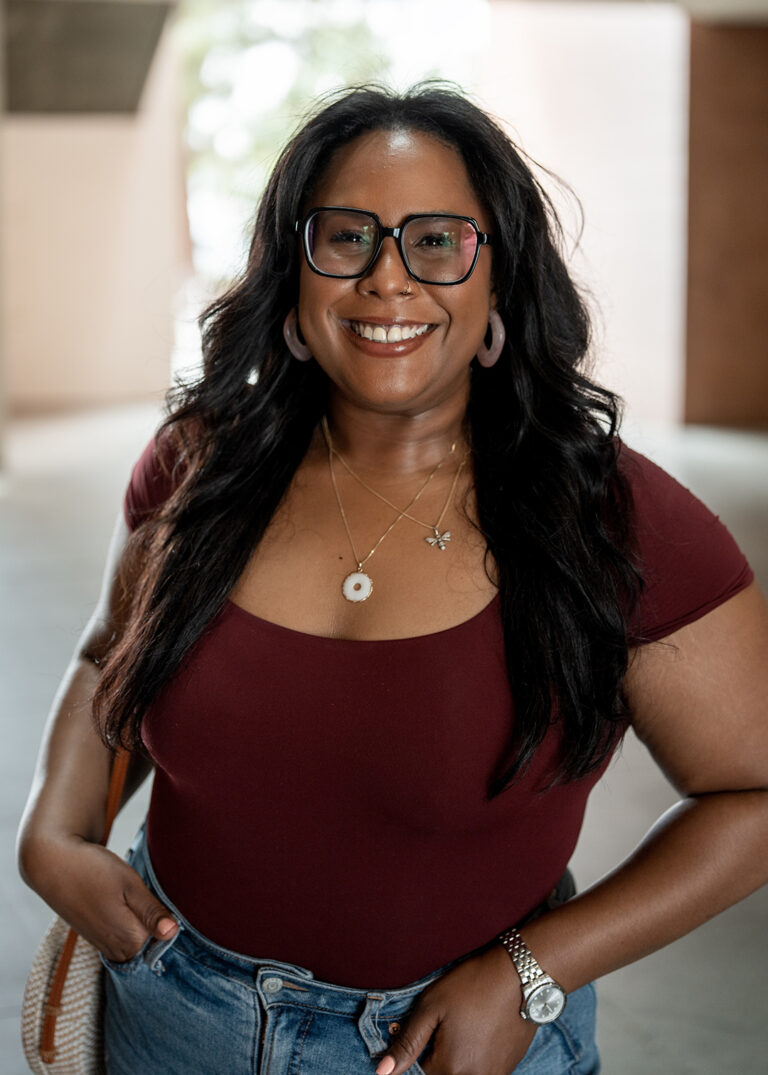
Shanelle Rose, B.A. in Africana Studies
It was 2008 and Shanelle Rose, 35, of Quartz Hill, was at Oklahoma State University working on an associate’s degree in teaching when she saw some people doing work in the high-voltage electricity program.
“It looked really cool, fun and different,” she said.
Intrigued, she asked one of the students how she could get into the program.
“They laughed at me and said, ‘You can’t do this because you’re a girl. This is for men. You wouldn’t make it,” she recalled. “You can’t tell me I can’t do something just because I’m a woman because I’ll do it, just to prove you wrong.”
Two years later, Rose became the first woman to graduate from the program, all while also earning a degree in secondary education. She was the first Black woman to graduate from the program. She moved back to Southern California, where she grew up, and got a job with the LADWP as a lineman. She was the first Black woman and one of only two women working on powerlines and building power line structures from transmission towers to wooden power poles. In 2018, she transferred to the city of Los Angeles’ traffic signal system, working as an electrician, again one of two women in that role.
Then two years ago, she came to the realization that all the work she was doing wasn’t really her passion.
“I thought, ‘I think I’m really doing this because some guy laughed and told me I couldn’t.’ I really wanted to do something that feeds my spirit and makes me feel like I’m more in line with my purpose on this planet,” Rose remembered.
She decided to go back to school, change her career path and become an attorney. Step one was to get her bachelor’s degree.
Rose chose CSUN because many of her friends had attended the university in 2008 and had successful careers, including her best friend who now had a successful law practice.
“I was so excited when I go the letter that I’d been accepted,” she said. “I realized then and there that I’d always wanted to do this. I don’t know why I took so long to change my career path.”
She started out as a psychology major but, after taking a couple Africana studies classes, she decided to change majors.
“I knew that having a major in Africana studies and then going on to law school would only better help me help my community and give me a deeper understanding of the systems that dominate our world and how we can navigate them better,” said Rose, who plans to take the Law School Admission Test (LSAT) this summer.
Rose is scheduled to take part in the commencement ceremony for the College of Social and Behavioral Sciences on May 17. To see a full-length video of Rose’s story, click here.

Comments are closed.