

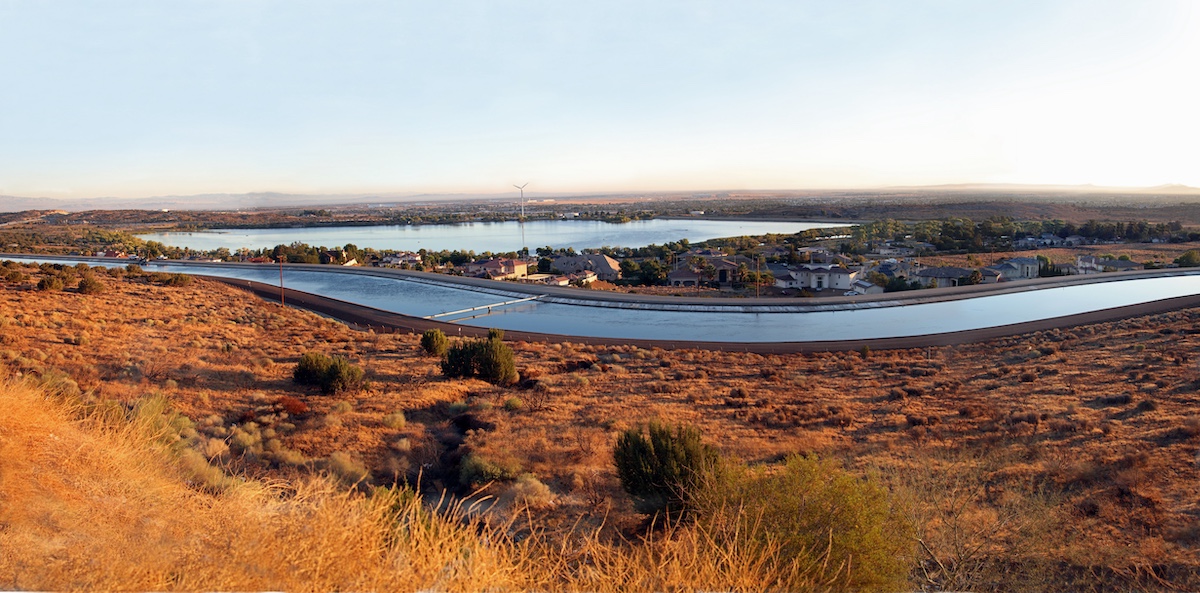
CSUN researchers recently got to work on a vexing question: Why does the Antelope Valley have Los Angeles County’s highest rate of youth ages 16-24 who are not in school or working?
To find out, the team spoke to dozens of nonprofit and public-aid organizations in northern Los Angeles County and interviewed and surveyed dozens of the youths themselves. The answers could help this group, called “disconnected youth,” who face many barriers to stability in their home and work lives.
“We are trying to shed some light and understanding,” said Henrik P. Minassians, academic director of the CSU5 ReLAY Institute (Reconnecting Los Angeles Youth) as well as CSUN’s Master of Public Administration Program, the lead researcher on the project.
The ReLAY Institute will host a pair of webinars, June 24 and July 8, to discuss findings in the team’s report. The webinars are intended for policymakers, educators and practitioners supporting disconnected youth, as well as current and former disconnected youth and community advocates.
The study was supported by a $100,000 grant from the Conrad N. Hilton Foundation.
The CSU5 is a partnership between five California State Universities that serve the Los Angeles region to support business, economic and community development. The ReLAY Institute is a CSU5 initiative headquartered at CSUN. It is a collaboration of public, private and philanthropic agencies from across Los Angeles County, focusing on research and evaluation, training and capacity-building, and resource organization to strengthen services and improve opportunities for disconnected youth in the region.
The research project was inspired by a 2024 project called “Measure of America” by the group Social Science Research Council. Their report found that there are 155,000 disconnected youth in Los Angeles County, with the highest rate in the Antelope Valley.
CSUN’s research team included ReLAY Institute staff, CSUN professors of urban studies and planning and anthropology, student researchers and the Tseng College marketing team.
The Findings
The ReLAY Institute found structural barriers to education, stable housing, jobs, transportation and mental health services.
The highest concentration of disconnected youth are in Lancaster, Minassians said. Rates are highest among young adults ages 21-24, particularly those transitioning out of high school, foster care or juvenile justice systems.
These individuals often find themselves with incomes below what’s necessary to afford rent in the region. Although the number of jobs in the region has grown, these youth often don’t have the necessary skills. In the study, many lamented that even entry-level jobs often require experience.
The Antelope Valley’s geography is also a barrier, as limited transit options make for commutes of up to two hours. Many find themselves living in neighborhoods distant from jobs, schools and other services.
Minassians said that systems designed to help often have gaps. For example, youth leaving juvenile justice systems can’t get help with housing until they demonstrate they are homeless. Job placement services often result in short-term work but don’t provide long-term stability, he said.
The youth who shared their lived experiences with the researchers said they were motivated to work and improve their circumstances.
“In interviews, they are saying, ‘We want meaningful work.’ They want access to transportation, they want access to housing stability,” Minassians said. “The reality when it comes to certain practices [is], they don’t have the support system … they are on their own trying to figure things out.”
Next Steps
The ReLAY Institute’s report includes a series of recommendations that will be discussed at the June 24 and July 8 webinars.
These include an emphasis on stable housing first as the foundation for achieving other goals, including allocations for youth-specific housing within existing programs. The report also calls for transportation stipends, shuttle services and ride-share partnerships, among other transportation support systems.
Workforce programs can take steps toward long-term retention and wage growth from job placement programs, the report found. And local governments should invest in physical spaces, such as centers and shelters, that combine support, wellness services and community-building activities, the report also noted.
If you would like to support the work of the ReLAY Institute, or to start a fund of your own, please contact the CSUN Office of Development at (818) 677-2786 or development@csun.edu.

Comments are closed.