

Media Contact: Carmen Ramos Chandler, carmen.chandler@csun.edu, (818) 677-2130
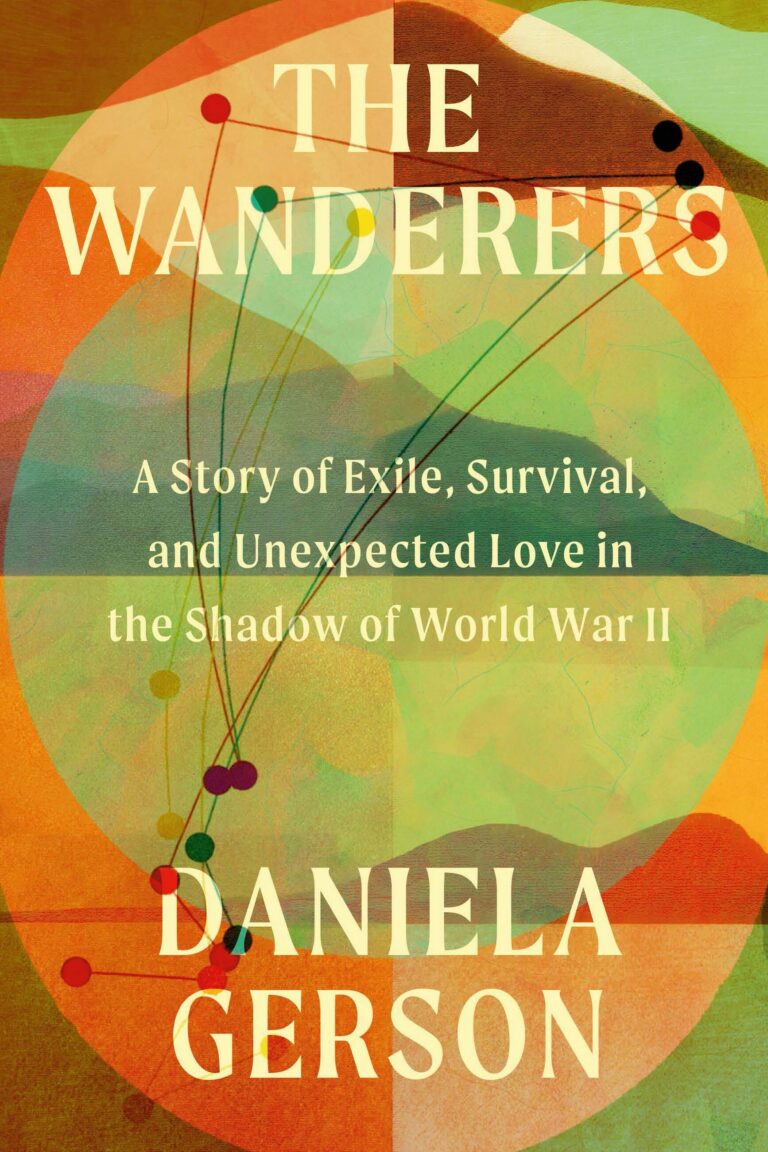
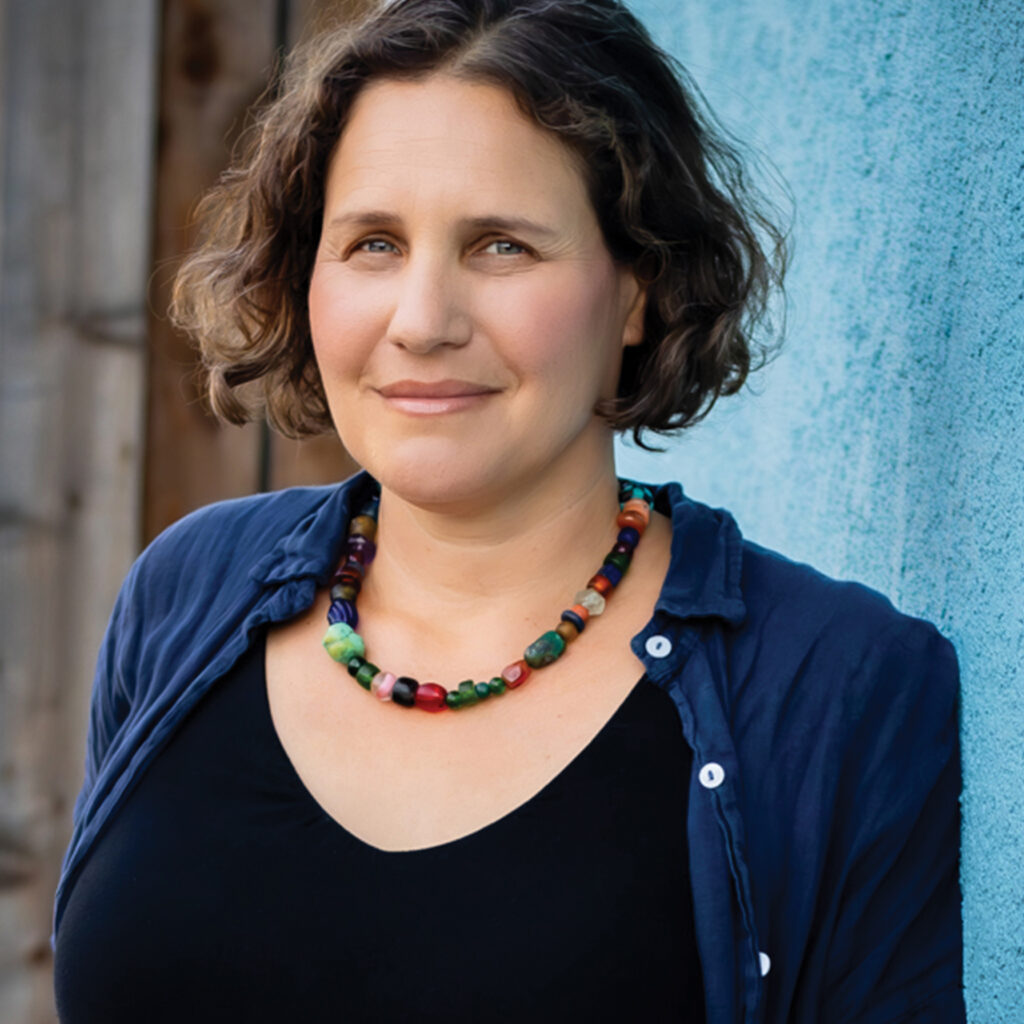
Her family’s escape from Poland during the Holocaust is a story that Daniela Gerson, an associate professor of journalism at California State University, Northridge, has been trying to tell for years.
It was not until she met her now wife, immigration attorney Talia Inlender, at a picnic at Griffith Park that Gerson, a respected immigration journalist, found the impetus for her book, “The Wanderers: A Story of Exile, Survival, and Unexpected Love in the Shadow of World War II.” The book, which went on sale March 31, is the true story of the Gerson and Inlender families’ intertwined past and sheds light on how hundreds of thousands of Polish Jews survived Hitler’s Holocaust at the brutal hands of Stalin.
“I have always been interested in my family’s story,” said Gerson, who teaches in the Mike Curb College of Arts, Media, and Communication. “I came at it knowing that they had survived in the east. They had survived via deportation to the Gulag. This was a Holocaust story that I did not see in museums or in the books I read.”
Gerson’s is a family of story tellers and documentarians. She knew about her grandparents’ escape from Zamość, Poland to Ukraine and then deportation to Siberia under Stalin. How her father was born in Uzbekistan and the family used fake names to come to the United States. But Talia Inlender knew little about her family’s past.
The couple were hanging out one night several years ago when the conversation turned to a Holocaust tour Inlender had taken as a teen.
“We started talking about Poland and our families in Poland,” Gerson said. “I asked, ‘Oh, what town is your family from?’ She tells me ‘Zamość.’ It was like goosebumps because this is the town my family had fled. When you have a town your family is forced to leave behind, it takes on a mythical dimension — it’s not really a place and you only know people from your family who talk about it.”
When she got home that night, Gerson looked up a memorial her grandfather has helped spearhead in Paramus, New Jersey, to honor those who did not survive the Holocaust from Zamość.
“Talia’s family didn’t talk much about Zamość, nor did they know of anyone else of their family who might have been from there,” Gerson said.
Yet, on the memorial for those murdered in Zamość, carved in stone, was the name Inlender. Further digging led Gerson and Inlender to a website of Israelis from Zamość. There they found the story of Roma Inlender and her mother, who were shot during the evacuation of the city’s ghetto.
“They were from a wealthy family from Zamość,” Gerson said. “No one survived of these Inlenders. But Talia’s family had survived. We were starting to put these pieces together — like who are the Inlenders on the memorial and what happened at that time? We made a vow then that we were going to track this all down.”
Ten years passed. Gerson and Inlender married and started a family. It wasn’t until their fathers died that they realized that it was time to revisit that vow.
While Gerson has told parts of the story in the past, whether as part of an oral history with her grandfather in eighth grade or as part of an immigration documentary for German radio, she has never done the research necessary to chronicle her family’s complete journey to the United States.
“My father had died and I wrote an essay on how my father had lied,” she said of her New York Times essay My Grandparents’ Immigration Lies Shaped My Father’s View of Justice. “His family had had to take on fake identities and essentially fabricate their identities to enter the United States after the war.”
During a conversation with her editor, Gerson mentioned that her wife’s family was also from the same town her as family’s in Poland.
“She said ‘That’s a book,’” Gerson recalled. “That’s what started me thinking, maybe this is a book.”
Gerson spent months researching the book. She took a sabbatical and she and Inlender moved to Warsaw for a while to facilitate her work. Along the way, she discovered her wife’s family lived only blocks away from her’s in Zamość before the Holocaust.
“I would look for the story of the Jews who survived in the east and wondered why their story wasn’t reflected in the narratives out there,” she said. “It was something that kept itching at me. I realized that the only way to tell it was a personal perspective.”
She included her and Talia’s love story “because I don’t think I could do a book that doesn’t end with a happy ending. The topics are so dark — I delve into some of the more brutal elements of persecution—and we live in such a dark time. It needed to end with hope.”
Gerson’s book,“The Wanderers,” is available at all major book sellers. She will be speaking about her book at the university’s 2026 Provost Colloquium on Wednesday, April 22, at 3 p.m. in the Orchard Conference Center on campus. The presentation is open to the public. For more information, click here.


Comments are closed.