Media Contact: Carmen Ramos Chandler, carmen.chandler@csun.edu, (818) 677-2130
Growing up, Stevie Ruiz was always astonished by how much his mother, a janitor for the California State Parks system, knew about the history and ecology of the land she was caring for. Yet park visitors always turned to a park ranger, not her, with their questions.
“My mother knew everything the tourists were asking the ranger, but he had the authority that my mom didn’t because of her role and because she was a woman and a Chicana,” said Ruiz, a Chicana/o studies professor at California State University, Northridge. “We have to tell the story of the people who are stewarding the land — who are very often doing the labor but not being recognized as stewards — and all the wisdom and knowledge that they possess.”
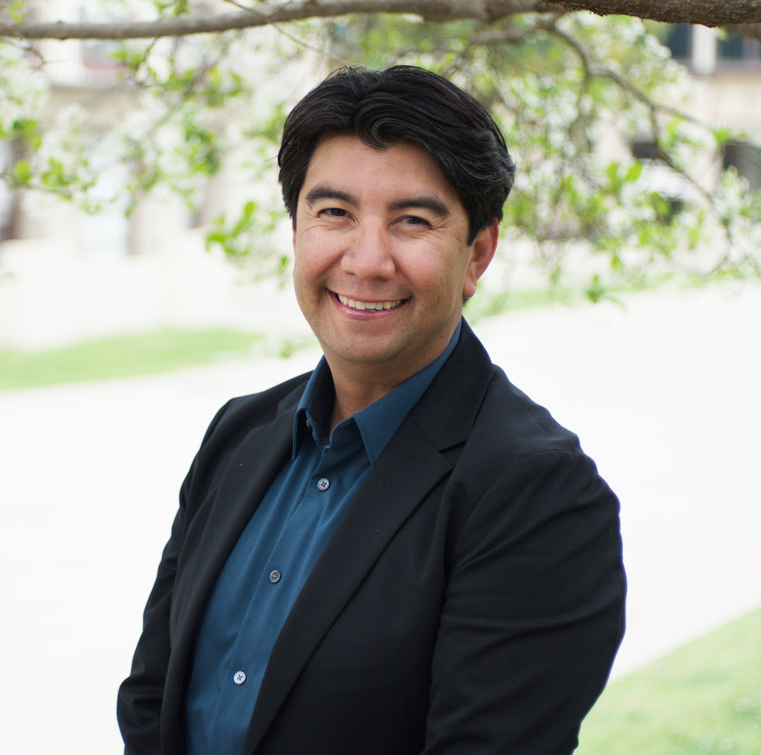
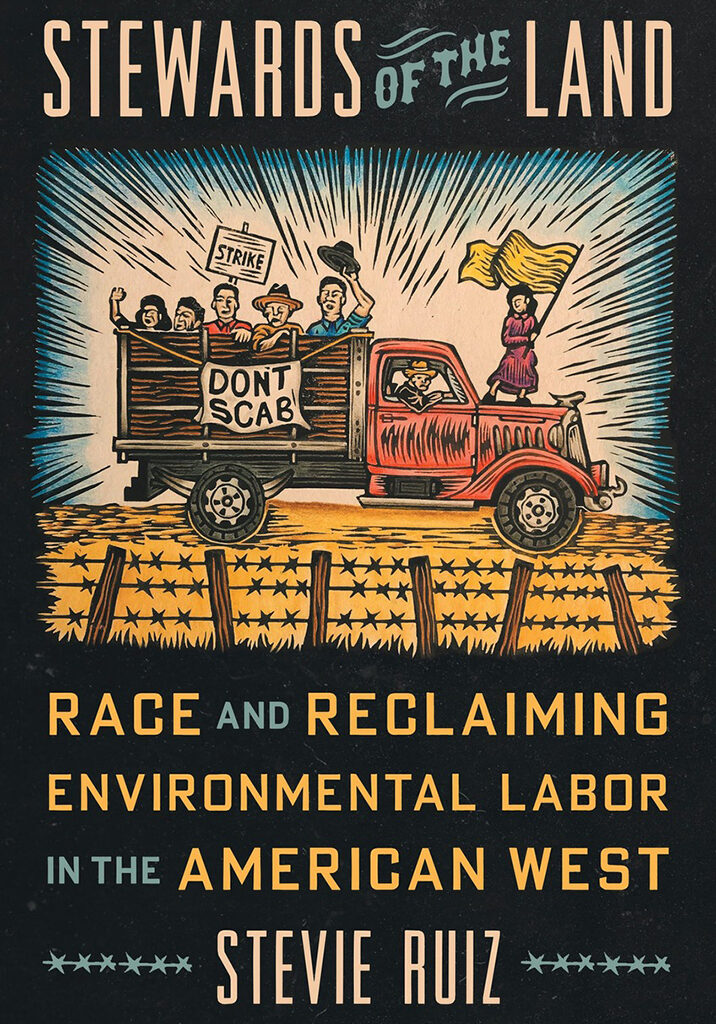
Ruiz, who teaches in CSUN’s College of Humanities, does just that in his new book, “Stewards of the Land: Race and Reclaiming Environmental Labor in the American West.”
The history of the environmental movement — from the environmentalism of the 19th century to the environmental justice struggles of the 20th century — has often been portrayed as a series of efforts led by white environmentalists, he said.
“But it’s always been a multiracial endeavor,” Ruiz said, arguing that environmental justice was never just a reaction to pollution in the 1970s. “It has a much longer history tied to land theft, land exploitation and the everyday struggled of frontline communities to live and work with dignity.”
In his book, Ruiz tells the stories of immigrants and the children of immigrants who used the knowledge brought from their countries of origin to help shape the future of their new home.
“There were people who passed down ecological knowledge or technology—knowledge about medicine, seedlings, the healthiest types of food to eat when dealing with something like diabetes, that natural remedies that don’t rely on the pharmaceutical industry, woodworking, hospitality,” he said. “Much of this knowledge has been passed down across generations.”
Ruiz coined the term “ecological wisdom.”
“It’s the knowledge that people bring with them from their home countries that they adapt to the local ecology,” he said.
Ruiz pointed to the long history of Chinese immigrants and their skills at woodworking as well as their work in the hotel industry in Yosemite.
“Many of these men were working as cooks, but they had an ecological wisdom that actually helped to pioneer the introduction of the National Park Service,” he said.
Ruiz singled out Tie Sing as an example. The son of Chinese immigrant parents, Sing spent most of his career cooking for the geologists and mapmakers of the U.S. Geological Survey in the late 1800s.
“He was a key pioneer for Chinese immigrants and people who had to exodus the gold rush industry because of a tax that forced many Chinese to look for work outside the mines,” Ruiz said. “He was hired by the U.S. Geological Survey and ended up expanding what we know as the hospitality industry because he became well known as a chef, so well-known that that he was dubbed the ‘mountain chef.’”
Sing’s ability to facilitate fine dining outdoors and under the stars in Yosemite helped transform the concept of ‘camping,’ Ruiz said.
“Today, we think of camping as something that everyone wants to be part of,” Ruiz said. “In the 19thcentury, camping was something that everyday citizens associated with poverty. Only tramps, the homeless, hobos camped in the woods. Sing and the meals he served, often described as feasts, helped Stephen Mather (then Assistant Secretary of the Interior) to lobby Congress to establish the National Park Service.”
A peak along Yosemite’s southeastern boundary is named after Sing.
Ruiz noted that California’s big agribusiness owes much of its success to Mexican immigrants who not only brought with them seedlings from their native land, but also the understanding of how to work the land and to adapt and learn from the indigenous people who originally occupied it.
“One of the things I found is that there was a collaboration and cooperation between indigenous communities that were living in the area and people that were willing to learn about farming practices,” he said. “Today, farming is big agribusiness, but in the 1920s and 1930s, you had to rely on small farms and many of those people were immigrants.
“Whether it was in Yosemite or in Central Valley farms, immigrants built the foundation of the American West that we take for granted today,” Ruiz said.