Media Contact: Carmen Ramos Chandler, carmen.chandler@csun.edu, (818) 677-2130
For those who know San Fernando Valley history, the names Bobbi Fielder, James C. Corman and Ed Davis will resonate. They were elected officials, Democrat and Republican, who left their mark on not just the region. Their actions helped shape the state and even the nation.
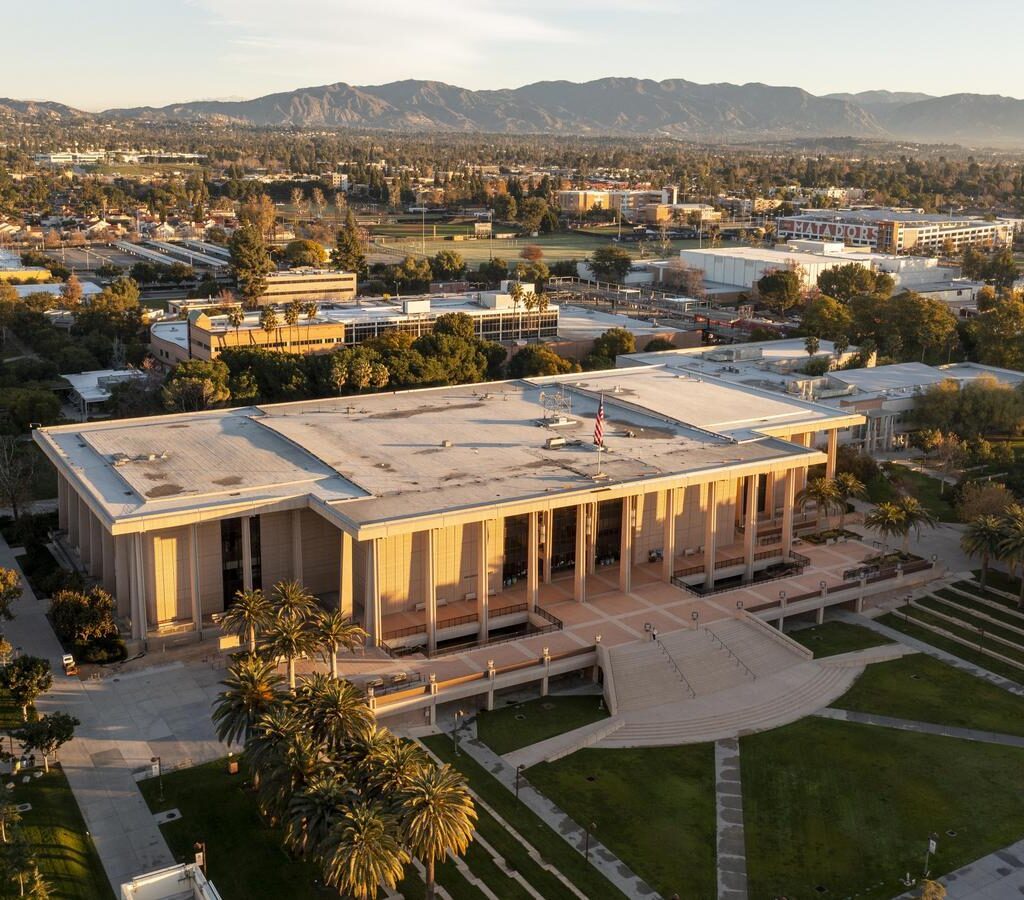
California State University, Northridge has received a $284,235 grant from the National Endowment of the Humanities (NEH) to physically arrange, describe, rehouse, and make available over 400 linear feet of archival materials documenting the careers of Fiedler, Corman and Davis. In addition, the grant provides funding to digitize and make freely accessible hundreds of pieces from the politicians’ collections.
“We have several legislative collections, including the papers of politicians who represented the Valley and other districts in Los Angeles at the federal, state and local levels,” said Ellen Jarosz, head of Special Collections and Archives in the University Library. “But the opportunity and resources to go through them and make them more readily available to researchers and the public really wasn’t there until now.”
Funding for the project titled “American Government Traditions: Federal, State and Local Intersections in Post-War Los Angeles, is part of the NEH’s Rediscovering Our Revolutionary Tradition program, which is designed to “support activities to preserve and improve access to primary source materials related to the history of American independence, the establishment and expansion of the nation, and federal, state, and local government.” The grant’s creation coincides with the 250th anniversary of the nation’s founding. The NEH received 103 eligible applications under the program. CSUN was one of only 33 approved for awards.
“The stars seem to have aligned,” said Mallory Furnier, a special collections and archives librarian at CSUN who suggested that the library apply for the grant. “We’ve had fairly regular research interest in Corman’s archives, as well as those of Fiedler and Davis. This is a wonderful opportunity to really go through them and make them more accessible.”
The grant will fund the hiring of a project archivist to arrange and describe 400 linear feet of archival material documenting the careers of Fiedler, Corman and Davis. The results will be discoverable through the Online Archive of California, and 300 items will be made searchable online.
“It will be kind of a ‘mini collection’ that will be available online for anyone to access,” said University Archivist Gayle O’Hara, who is also working on the project.
Fiedler, a Republican, served three terms representing California’s 21st District, which includes the San Fernando Valley, in the U.S. House of Representatives from 1981 to 1987. Fiedler, who died in 2019 at the age of 81, began her political career mobilizing other Valley mothers to protest court-ordered desegregation busing during the 1970s. In 1980, she upset Democrat Corman for his seat in Congress.
Corman, a former Los Angeles City Council member, served as a member of Congress from 1961 to 1981. For part of that time, he was chair of the Democratic Congressional Campaign Committee. During his 20 years in Congress, Corman voted in favor of the 24th Amendment to the U.S. Constitution, the Voting Rights Act of 1965, the Medicare program and the Civil Rights Act of 1968. Corman died in 2000 at the age of 80.
Davis, a Republican, was chief of the Los Angeles Police Department from 1969 to 1978. He retired from law enforcement to run for governor of California. He lost that race but was elected in 1980 as a state senator. He served in the California senate for 12 years. He died in 2006 at the age of 89.
Work on processing their collections is expected to begin this fall. The project is expected to take about two years to complete. It will culminate with these physical collections being opened to researchers, a curated online collection, and an outreach event for the campus and community.
“Our politics are so polarized right now,” Jarosz said. “Going through these collections reveals the ways a single issue or idea has been championed on both the left and right over time.”
Jarosz also said the project is focusing on legislative papers, not the personal papers, of the three elected officials.
“The collections contain what was literally in the filing cabinets in their offices when they were serving,” she continued. “We don’t know everything we will find because these collections have been unprocessed. That’s part of why we want to do this project, so we can learn more. Just from a cursory review in preparing the proposal, I think it’s pretty clear that sometimes what these elected officials thought about something was different from what we might expect.”