

A conversation with Africana Studies professor W. Gabriel Selassie I about the Harlem Renaissance, in honor of Black History Month 2026
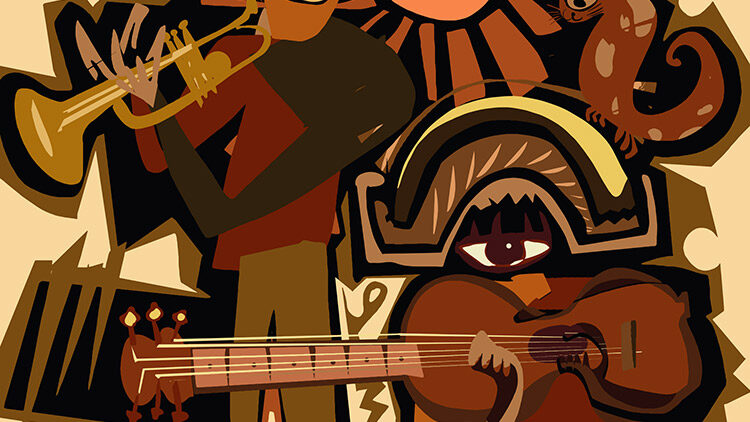
In the 1920s, cities around the world pulsed with a new excitement — jazz spilled from crowded clubs, writers debated art and identity in sidewalk cafes — as a new generation of Black artists revolutionized American culture. This explosion of creativity, known as the Harlem Renaissance, marked a turning point in history as writers, musicians and scholars countered stereotypes and fostered pride in Black culture.
W. Gabriel Selassie I is the director of CSUN’s Center for Southern California Studies and professor of Africana Studies in the College of Social and Behavioral Sciences. In an interview with CSUN Newsroom, Selassie noted that Harlem Renaissance artists used their talents to introduce the world to an authentic view of the arts they practiced and dispel the offensive depictions that many people saw in minstrel shows.
“All of a sudden, [during the Harlem Renaissance], you’re having Black people taking control of their own culture, and it is shocking for white people to see Black people forging their own cultural identity,” Selassie said.
Artists commonly associated with this time in history include musicians Duke Ellington and Louis Armstrong; performer Josephine Baker; writers and intellectuals W.E.B. Du Bois, Langston Hughes and Alain Locke as well as painter Aaron Douglas, who is often referred to as the “father of African American art.” The Great Migration, or the influx of 5 million Black people from the southern United States to urban centers around the country — most notably New York City — is often credited for this exceptional time in history. However, Selassie points out that this wave of original expression was happening around the world.
“I think that we overplay and overstate the Great Migration in terms of its role in creating the Harlem Renaissance more than anything,” he said. “There were people in Paris, who were active contributors to the Harlem Renaissance, and who never set one foot in New York or anywhere in the United States.”
Selassie teaches two courses in Africana Studies that cover aspects of the Harlem Renaissance, including African American History: Civil War to Present (AFRS 271) and Introduction to Black Studies and Culture (AFRS 100). Many students come to the courses having learned about the time period in high school, he said.
“They generally get a decent overview [of the Harlem Renaissance] but do not get into the politics and the impact,” he said. “But they do get a sense that it was a major time period in Black history.”
Selassie noted that his students are impressed with the high level of creative output at the time.
“My students generally think that their current generation is lacking in terms of creativity, particularly in music,” he explained.
Among the reasons such a vast amount of work emerged and spread during this period, Selassie noted, was that many prominent artists were born at the turn of the 20th century, when numerous innovations, including the radio, dramatically changed people’s lives. Exposure to the rapidly modernizing world had prepared people to explore and embrace different cultures, Selassie said.
“The world in 1880 and the world in 1910 [was] completely two different places … The inventions at the turn of the century are coming into people’s public consciousness,” Selassie explained. “What happens in the Harlem Renaissance is that people recognize there’s a sea change going on in the world. The world is dramatically different, and one of the differences that people recognize is in culture.”
The art forms that blossomed during this time included jazz poetry, Afro-centric modernism in the visual arts, and jazz and blues. Selassie noted this was also a time for significant symphonic works from composers Florence Price, William Dawson and William Grant Still.
Salons, which originated in 17th-century France, were also a key element of sharing different ideas during this time period. People hosted events in private homes that featured performances, as well as intellectual discussions that encouraged expressive freedom and debate.
The spirited expression of the Harlem Renaissance salons inspired Yan Searcy, dean of the College of Social and Behavioral Sciences, to start the “Salon Series” at CSUN in 2021. “The goal of the salons, then and now, with the Salon Series, is to bring together friends in an intimate environment to enlighten, entertain and inspire,” Searcy said. On February 5, the series welcomes Cedric the Entertainer in conversation. The event will support the college’s Community Endowed Professorship in Africana Studies.


Comments are closed.