Media Contact: Carmen Ramos Chandler, carmen.chandler@csun.edu, (818) 677-2130
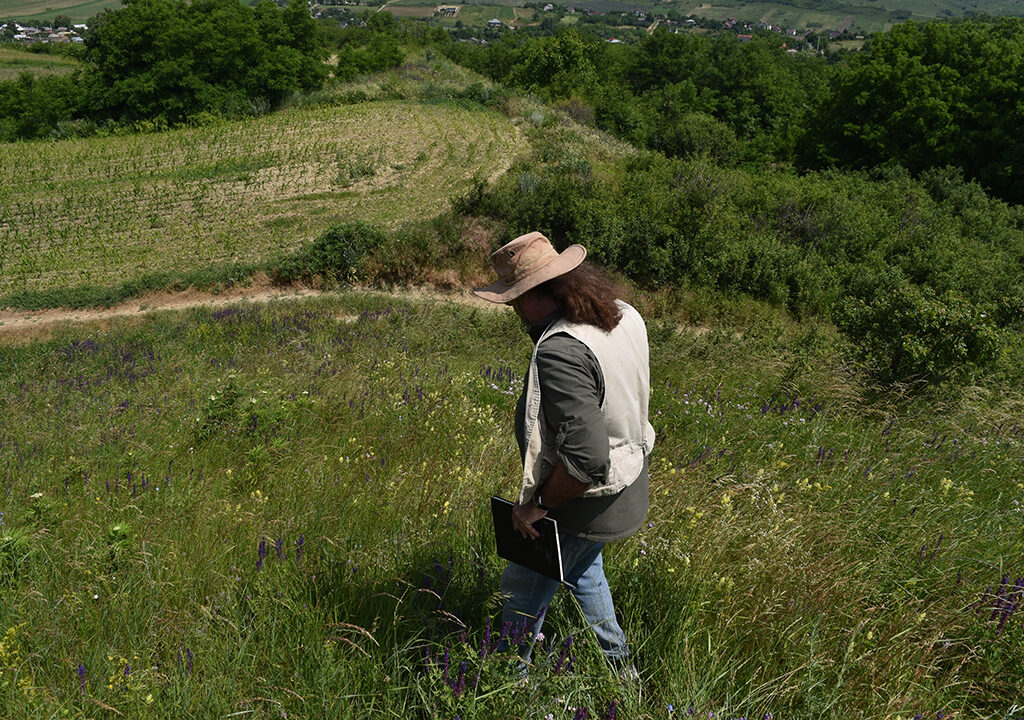
Owen Doonan, an art historian and archaeologist at California State University, Northridge, sees the arguments taking place in the media and online about the accuracy and authenticity of Christopher Nolan’s film “The Odyssey” as an opportunity to explore the ideas of artistic freedom and responsibility, and the malleability of myth.
Doonan, an expert in ancient Eurasian and Mediterranean cultures who teaches in the Mike Curb College of Arts, Media, and Communication, pointed out “there was no absolutely ‘original’ story” about the legendary hero Odysseus’ actions during and after the Trojan War. According to legend, Odysseus spent a decade to making his way back home to Ithaca, along the way encountering such mythical creatures as the Cyclops Polyphemus, Sirens, Circe and Calypso.
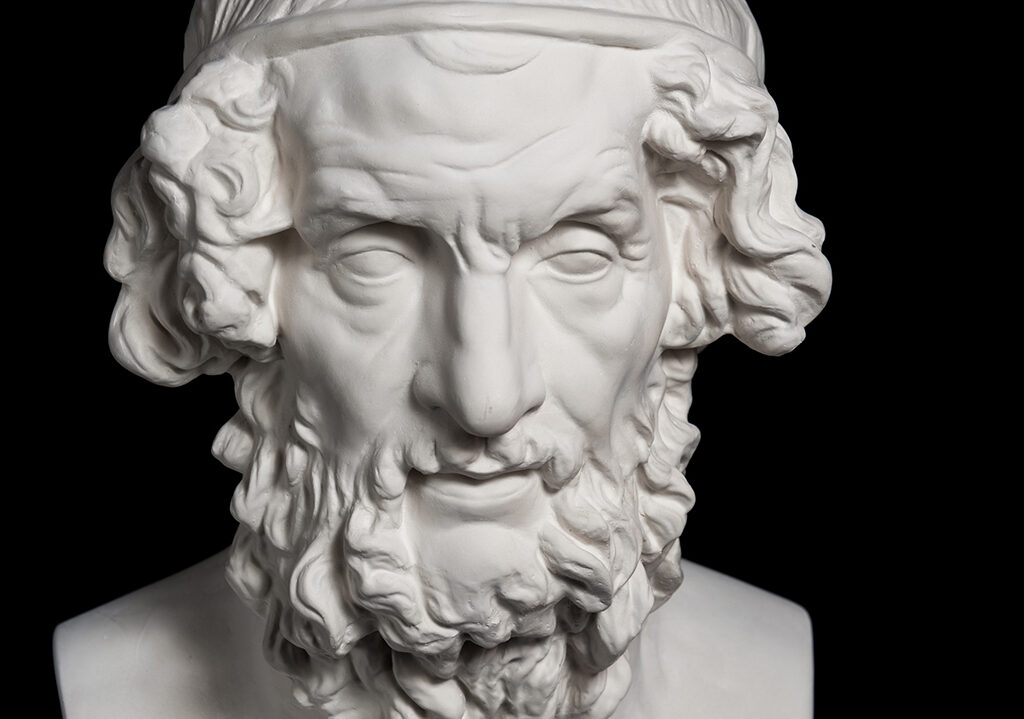
“We generally think of the events associated with the story taking place sometime a little after 1200 BC,” Doonan said. “To be honest, there’s even been a recent discovery of a Luwian hieroglyphic inscription from the 12thcentury BC that has the first lines of Homer’s ‘Iliad,’ which is 400 years before the literary character Homer, who’s been assigned authorship to the ‘Iliad’ and ‘The Odyssey,’ is thought to have been active. Many elements of the story, like the Trojan horse, are best known to us from later writers like the Roman Virgil, whose Aeneid was written 700 years later. So, the question who has the right to work on the story and present it is a red herring.”
More relevant and interesting to explore, Doonan said, are questions about effectiveness, richness and depth of the modern retellings of Odysseus’ adventures.
“There are many ways in which I think we could talk about Nolan’s superficial handling of the text,” he said. “It’s not really a question of legitimacy, but about the choices an artist makes. When an artist develops a work, when they delve more deeply into their material, they will most likely be producing something that’s more satisfying. Artistic choices will have more layers to them: the plot twists, the themes, the ideas behind the set creation and so on. These elements can be quite satisfying if the artist has really immersed themselves and embraced the text with humility.
“I work a lot with art students and, as an ancient art specialist and as an archaeologist, I really try — if they are going to work off ancient-inspired material — to inculcate in my students a respect for the original,” Doonan said.
While Nolan’s work focused on serious themes such as atonement and emotional price one pays for engaging in war, Doonan said the ancient Greeks loved an exciting story.
“As someone who teaches Greek art, I can attest to the ancient Greeks’ love of monsters, adventure and ‘the crazy stories.’ That stuff showed up in all sorts of ways in Greek art,” he said, pointing to tales that illustrate drinking sets ancient Greeks used at drinking parties known as “symposia.”
“They felt that Odysseus was exciting in so many levels,” Doonan continued. “He was admirable and exciting as a creative man, as a man who was ready to do whatever he needed to do to achieve his goals. That feels quite amoral to us now. I’m certainly not advocating that we need leaders who are going to do anything they can to achieve their personal goals. But the ancient Greeks admired him as a complicated man. As a man who crafted solutions that stretched the boundaries of the permissible.”
Doonan singled out the recurring motif in the Nolan movie of “Zeus’ law,” the idea that one behaves kindly to a vulnerable stranger because the stranger could be a god in disguise.”
“At the end of ‘The Odyssey,’ was Odysseus a vulnerable stranger or a god?” he asked. “Homer’s Odysseus is godlike. For the ancient Greeks, gods aren’t good. Godlike doesn’t mean good. Godlike means capable of visiting your desires and exercising your will with almost no consequences. When Odysseus returns home, he seems a sickly man. He is not Zeus but is “godlike Odysseus.” His wrath is like the wrath of a god visited on these lesser men who have abused his hospitality.
“Now, did Nolan have to go there? I don’t think he had to,” Doonan said. “That does not have to be his interest in telling the story. But, on the other hand, having an awareness that you’re pushing back on that somehow can make the story more satisfying.”
Doonan said that in reading translations of Homer’s “Odyssey,” many see Odysseus “as a scary individual.”
“And he is,” he said. “One of the things I work hard to do in my Greek Art class — whether they are oriented more towards mythology, literature, art or archaeology — I try to impress on the students that a culture may seem familiar but can actually be very strange. Making the familiar strange is an important process because you need to give a culture the space to be different from what you know and not just manipulate it like putty in your own ideological hands.
“One thing that Americans have trouble with is the idea that it’s okay for other cultures to have a completely different logical framework. The difference doesn’t’ make it wrong,” Doonan said. “I think what is missed when you give a story like ‘The Odyssey’ a Hollywood ending is the chance to celebrate a wholly new way of understanding heroism.”