

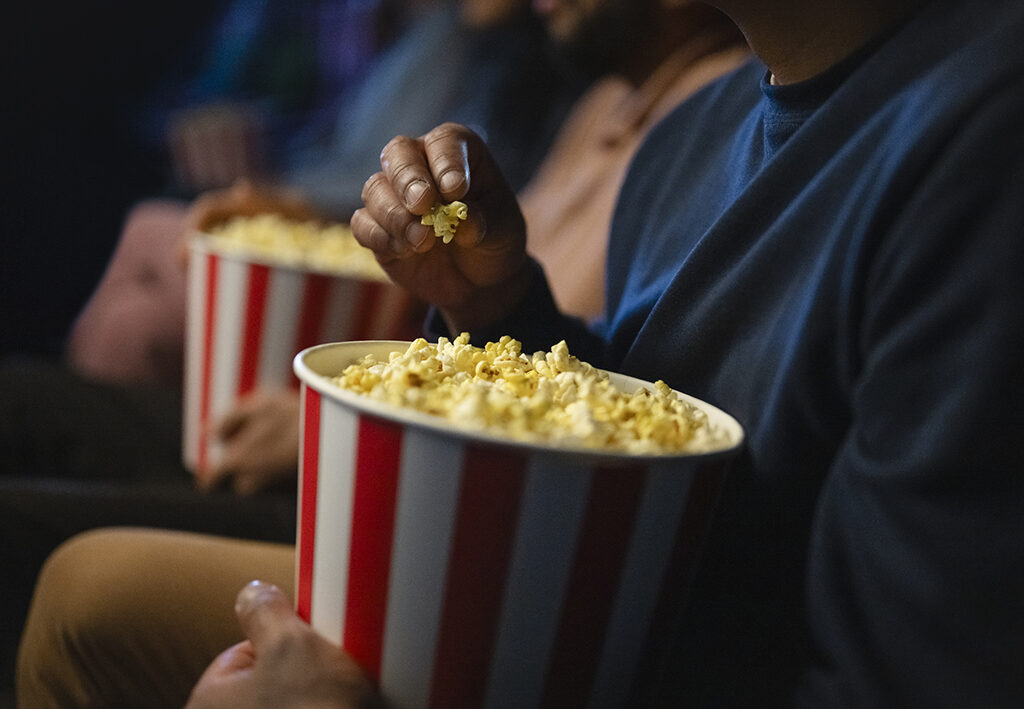
CSUN film professor Nate Thomas said that is not going to happen. Image credit: Tashi-Delek, iStock
Media Contact: Carmen Ramos Chandler, carmen.chandler@csun.edu, (818) 677-2130
For years, pundits have been ringing the death knell for Hollywood, claiming that the movie industry is on its last legs, unable to survive competition from streaming services and online content.
California State University, Northridge film professor Nate Thomas called those predictions “BS.”
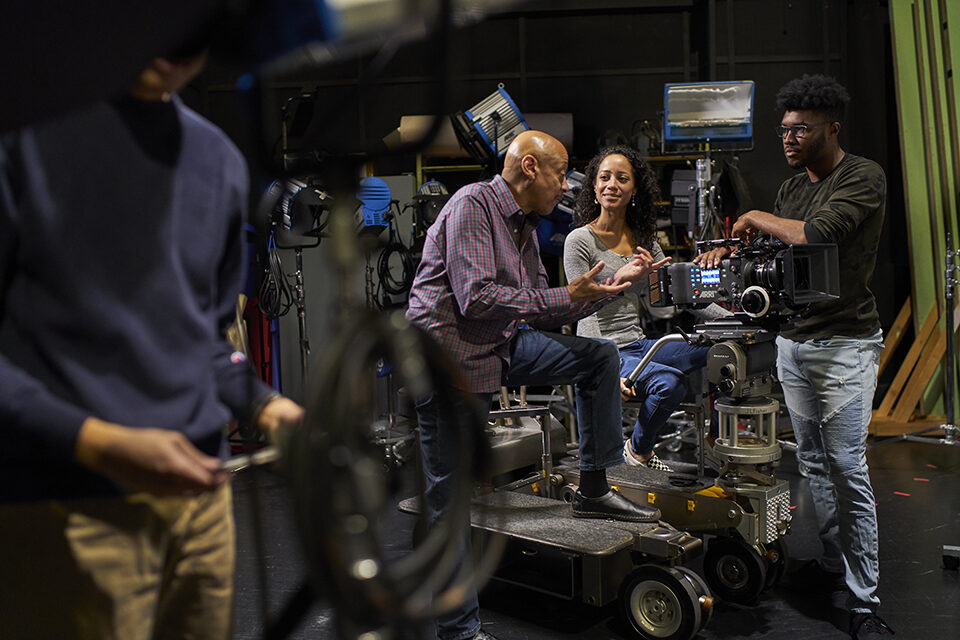
“Why? Human need,” said Thomas, who heads CSUN’s film production program in the Mike Curb College of Arts, Media, and Communication. “We will always have a need for storytelling. That’s not going away. It’s been with us since the beginning of time. So, there is going to be a need for content. There’s going to be a need for those to create the content, to edit it, to write it, to produce it, to perform in it and to distribute it. It’s just a human need.”
He pointed to the success of “Spider-Man: Brand New Day” and “The Odyssey.” Both of which have broken box-office records since their release this summer.
“‘Spider-Man: Brand New Day’ has broken historic, international box-office records, which goes to show that people will buy a ticket, leave the house with their family and spend 100 bucks and more if the content is good,” Thomas said, adding that even “The Odyssey,” a more “adult-oriented” film in terms of its audience, set records. “There has been a resurgence at the box office. It’s a notice to Hollywood to still make stories, write stories and produce stories that people want. And people wanted those stories this summer.”
Thomas said he’s not sure what Hollywood’s naysayers are basing their predictions on.
“I have no idea why they say what they say,” he said. “Look, things change. The way we consume content will change. The way we produce these movies will change. Obviously, with the advent of AI, there is going to be some change.
“More than 100 years ago, there was theatre,” Thomas continued. “Folks thought that with the advent of radio and movies, and then television, that theater would go away. Wrong! It’s changed, but people still go to the theater. People line up to see Broadway shows here in Los Angeles all the time. The art is going to change, but it’s not going to go away.”
Thomas pointed out that some movies are now being made with streaming in mind while others, like “The Odyssey,” were created with the intent of being seen in a movie theater.
“We’re learning to consume movies differently,” he said. “There are some movies that I wouldn’t pay a dime to go to the movie theater to see, and their creators know that. I can see them on Netflix or Amazon. But there are other movies that I wouldn’t dare see on Amazon. You just know the experience will be different. You won’t enjoy it the same as seeing it on the big screen.
“The Marvel movies are a prime example of that,” he continued. “They’re big movies. They’re very cinematic. Their Dolby Atmos sound needs to be experienced with those visuals. You won’t be able to get that experience on a two-by-four Vizio TV at home.”
Among the changes Thomas is keeping an eye on is the increasing use of digital to make movies.
“It seems everything’s digital now a days,” he said. “But there is a difference between movies made for digital and those made for film. The resolution of film still outpaces the resolution of digital. The folks that work in the various labs like FotoKem will tell you that the resolution of things shot on film is still better than the resolution of digital.
“We’re being accustomed, or dumbed down, to watching digital because all the movie theaters are now digital because that’s the ‘state of the art.’ It’s also the state of where our future is going,” Thomas continued. “But the resolution — the texture — is different on film. Christopher Nolan shoots film. Quentin Tarantino shoots film. There’s a texture, a depth, a warmth, a feel to their movies that’s hard for a layperson to articulate. But it’s one of the reasons why their movies stand out.”
Regardless of the changes, Thomas said the movie industry will survive, as will movie theaters.
“There’s just something magical about seeing a movie in a movie theater with a bunch of other people,” he said. “I want to sit in someone’s theater, eat that expensive popcorn and those expensive Goobers and drink that expensive $5 soda. I’ll pay for it because it’s part of the experience of being with others and enjoying a piece of art. It satisfies a very human need to share a storytelling experience with others.”


Comments are closed.