

Media Contact: Javier Rojas, Javier.rojas@csun.edu, (818) 677-2130
At a time when nearly everything is available at the click of a button, young adults are doing something unexpected: going back in time. As streaming services and digital platforms dominate entertainment, a growing number of young people are rediscovering physical media.
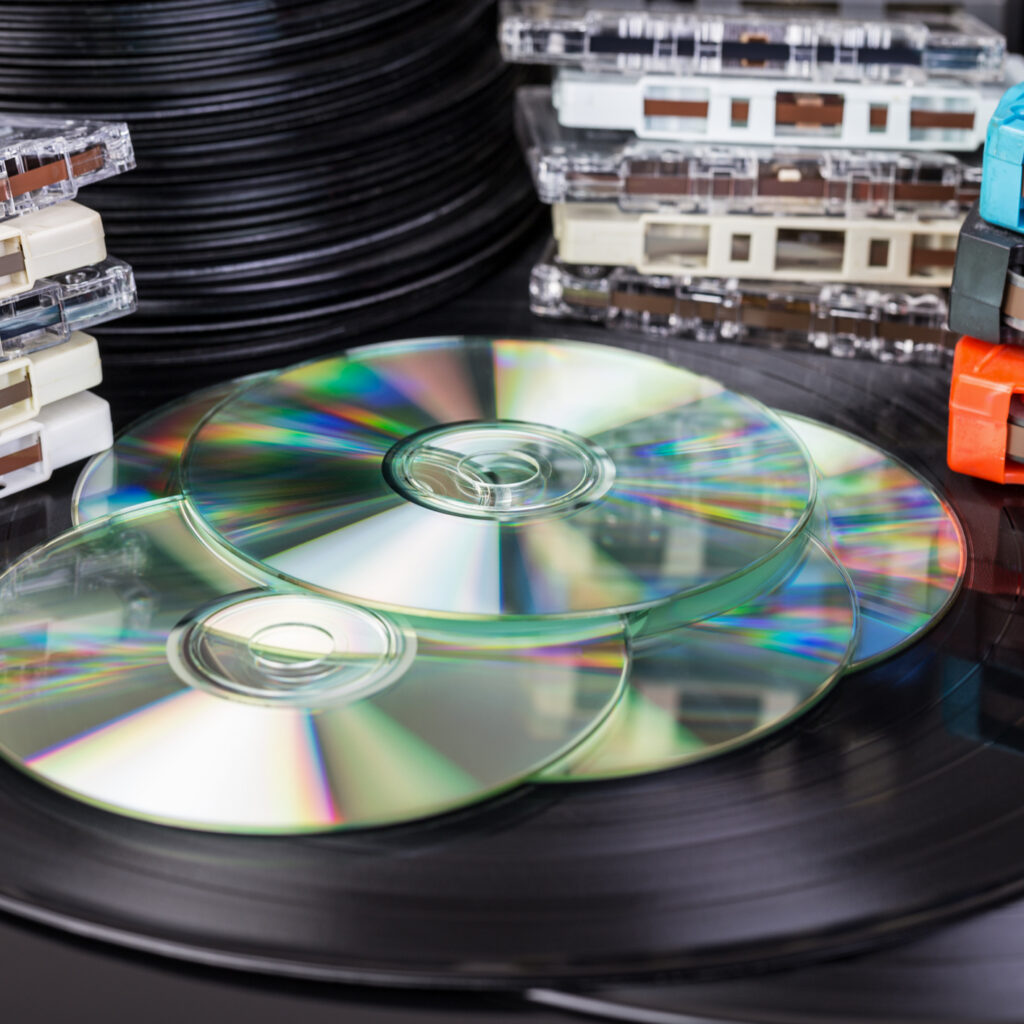
This resurgence has come in the form of vinyl records, CDs, cassette tapes and DVDs that were once viewed as obsolete media. However, California State University, Northridge communication studies professor Peter Marston sees this trend as nostalgia rather than a full revival of these formats.
“The resurgence in vinyl is driven largely by nostalgia for something that young people never experienced on the first place. They feel that they missed out on this era and see a lot of youth culture movies where records are important, and they were not around when that happened,” Marston said. “On the other hand, the resurgence in CD and DVDs was driven by a different type of phenomenon, as streaming became the most popular format, young people got reintroduced to these older formats because the resale market was affordable and then when you’re committed to a format, then you are also inclined to buy new products.”
“I see it as young people being nostalgic for something, in this case vinyl records,” he continued. “As for DVD’s, they want to experience a part of their youth again and have ownership of something in a time when streaming has dominated media consumption.”
Recent data supports this observation as numbers from the Recording Industry Association of America show that CD sales exploded in the first half of 2026. A new report from the organization says 17.5 million CDs were sold in the first six months of the year, up from just 12 million during the same period in 2025. The same goes for vinyl records as the number of units sold climbed by nearly 21 percent from last year to 26.5 million.
The trend also followed DVD sales, which have been falling for years, dropping more than 20 percent in 2023 and 2024 alone. However, the falloff slowed down last year when sales of DVDs, Blu-rays and 4K Ultra HD declined just 9%, according to the trade association Digital Entertainment Group.
While these numbers show that there is a growing interest in these older formats, people are not leaving streaming in droves. Music streaming generated $4.9 billion in the first half of 2026, up 4.7 percent and remaining the largest source of recorded music industry revenue.
Martson does not see the recent resurgence in vinyls and DVDs as a long-term trend, rather its finding niche audiences that are willing to spend money on these older media formats.
“Are we going to enter a time period where most people are listening to most of their music or watching most of their movies in a physical format? I do not think that it is ever going to happen,” Martston said. “When I was in college, the most important possession a person had was their stereo. When I ask my classes how many of you own stereos, the answer is always none. They might have a Crosley turntable, or they might have a CD player connected to their computer. But the notion of it becoming in terms of news, anything other than curiosity, I don’t think that’s happening anytime soon.”
What Marston does see is consumers, specifically younger people, looking to gain a sense of ownership and autonomy.
“There’s dissatisfaction with spending your money and getting nothing, which is what you get when you subscribe to Spotify or Netflix,” Marston said. “I think the acquisition of material goods is part of it and a DVD, CD and vinyl collection is a physical manifestation of one’s tastes and interests.”
“When the true resurgence in physical media has fully arrived, there will be a key indicator” he continued “They go back to making new cars with CD players.”



Comments are closed.